Tag: Startup Growth

  • 5 Signs Your Startup Has Outgrown the Hot Desk

    5 Signs Your Startup Has Outgrown the Hot Desk

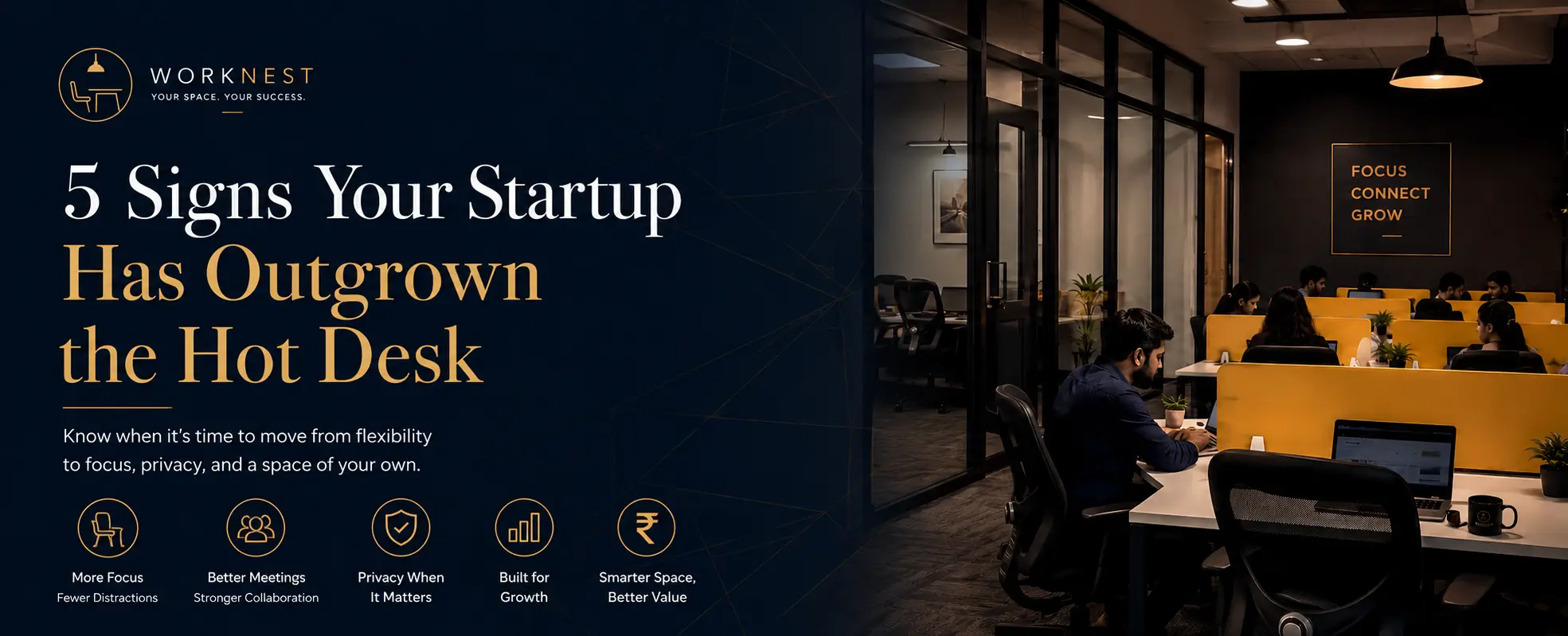
    As of 2026, if two or more of these five signs sound familiar, your startup has outgrown the hot desk: you’re booking desks daily just to fit your team, client calls compete with the open floor’s noise, storage has become a problem, meetings spill into hallways, and your team wants one fixed home base. The fix isn’t switching coworking operators – it’s upgrading within WorkNest, from a Hot Desk (₹699/day) to a Dedicated Desk (₹9,999/month) or Private Cabin (₹24,999/month).

    Most “time to leave coworking” articles assume you’re shopping for a new provider entirely. That’s the wrong frame if you already like your space. This guide walks through the five signs, using WorkNest’s own pricing and setup, so you can upgrade in place -no re-onboarding, no new commute, no lost momentum.

    Sign 1: You’re Booking Desks Every Single Morning
    sign 1 you're booking desks every single Morning

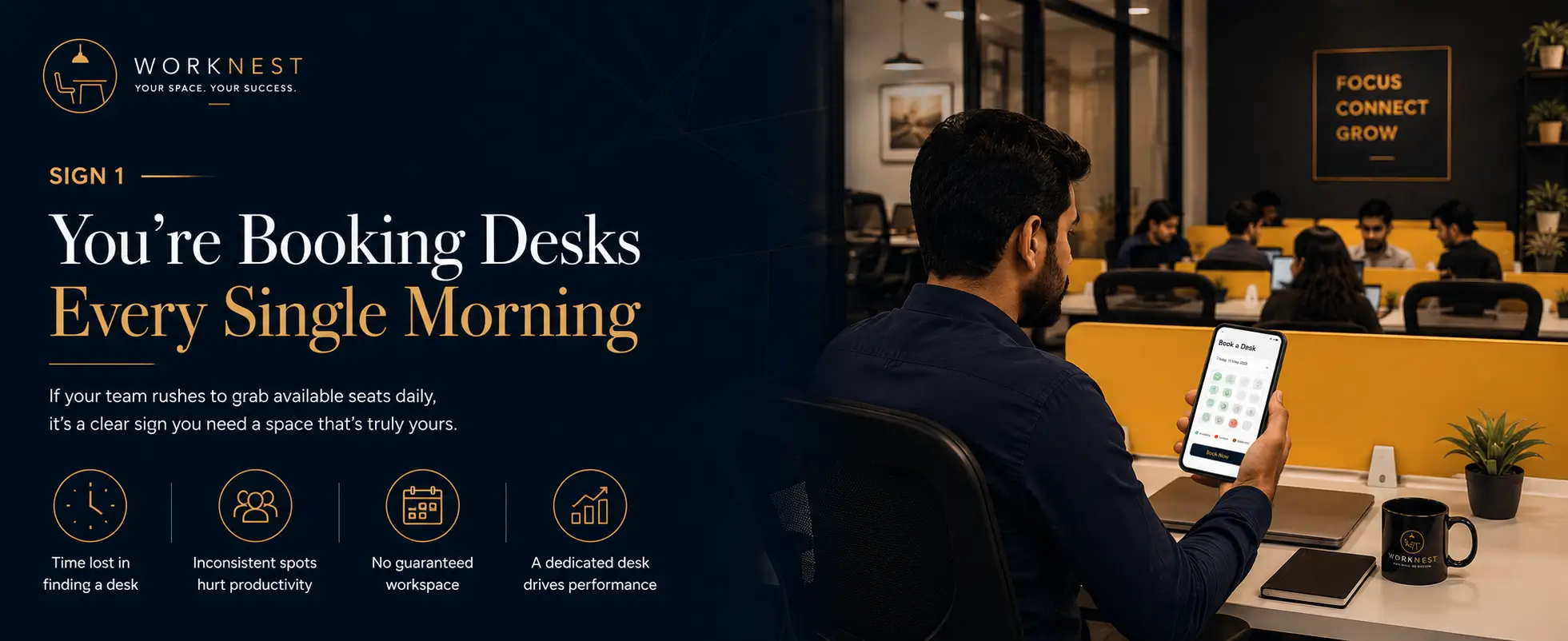
    Hot desking works when your team is small and unpredictable. It stops working the moment booking a seat becomes a daily task.

    Estimated – verify before publishing: WorkNest hot desk members typically move to a Dedicated Desk after averaging 4+ bookings per week for a month straight.

    At ₹699/day, a Hot Desk is built for occasional use. Once your usage becomes daily, the math flips in favor of a fixed plan:

    Usage Pattern Hot Desk Cost Dedicated Desk Cost Cheaper Option
    20-day work month ₹13,980 ₹9,999/month Dedicated Desk
    10-day work month ₹6,990 ₹9,999/month Hot Desk

    WorkNest signal: if your team has moved from occasional visits to a daily routine, you’ve already outgrown the hot desk model, even if no one has said it out loud yet.

    Sign 2: Client Calls Are Competing With Open-Floor Noise
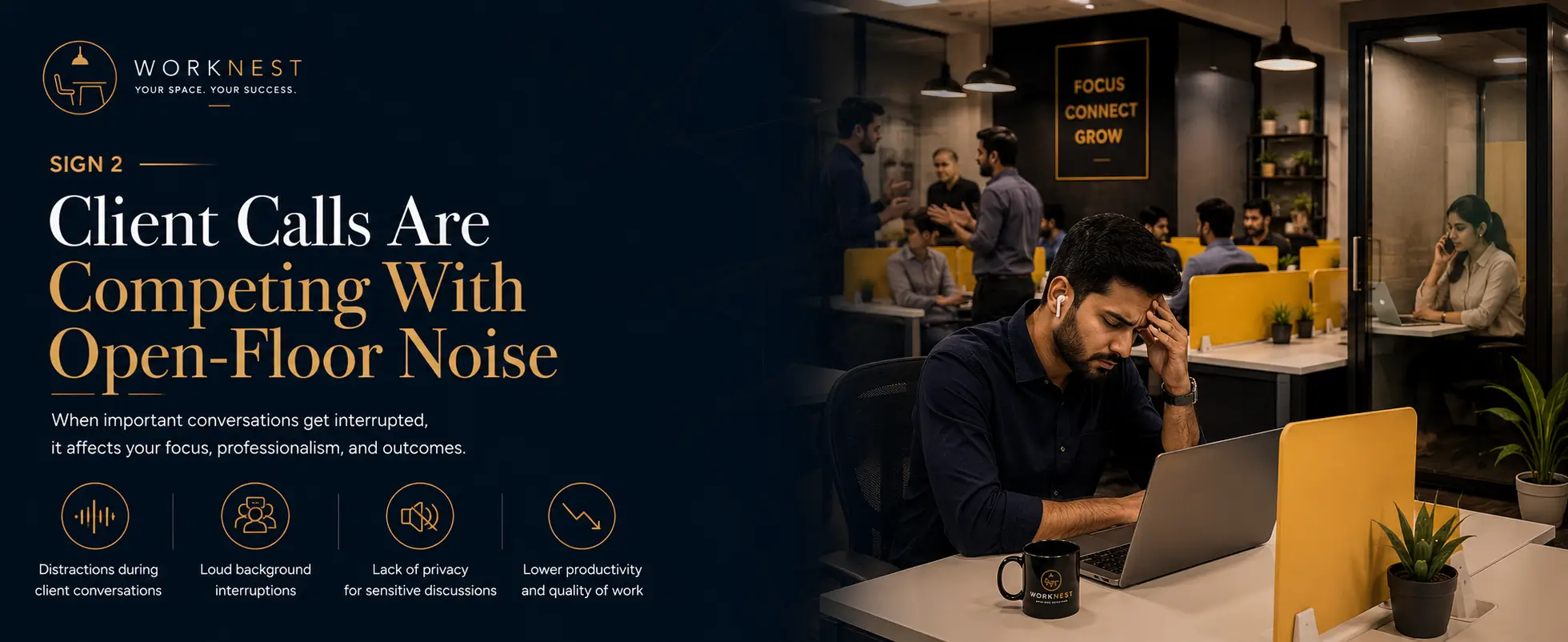
    sign 2 client calls are competing with open-floor noise

    Hot desk zones are shared by design. That’s fine for solo focus work. It’s a problem the first time you’re mid-pitch with a client and someone two seats over is on a loud call.

    Founder Arjun Nair put it simply after moving his team: a private cabin changed how clients perceived the business, not just how quiet the room was. Confidential calls, contract negotiations, and investor updates need a closed door -something a shared floor structurally can’t offer.

    A Meeting Room at ₹799/hour solves this occasionally. But if you’re booking one three or more times a week, a Private Cabin at ₹24,999/month gives you that privacy on demand instead of on a booking calendar.

    Sign 3: You’re Running Out of Places to Put Your Stuff

    Hot desks are stripped down by nature – no storage, no fixed monitor setup, no whiteboard you can leave mid-sketch. That’s efficient for a two-person team. It breaks down once you have equipment: a second monitor per employee, printed materials, product samples, or simply files you don’t want to carry home daily.

    Freelance designer Priya Singh switched to a Dedicated Desk specifically to keep her tablet and reference materials set up permanently, instead of packing and unpacking each morning. That’s the practical tell: if setup and teardown time is eating into your workday, storage has become a real cost.

    Sign 4: Your Meetings Have Outgrown Informal Corners

    sign 4 your meetings have outgrown Informal Corners

    Early-stage teams often run planning sessions from a lounge corner or a borrowed table. It’s scrappy, and it works – until client meetings, investor updates, or team retros need a real room with a door, a screen, and no interruptions.

    Sales lead Karan Malhotra found that closing calls went noticeably better once client meetings moved from open seating to a booked Meeting Room. First impressions matter more as deal sizes grow, and a shared lounge table doesn’t send the same signal as a private room.

    If your team is booking Meeting Rooms multiple times a week just for internal syncs, that’s a sign the whole team -not just meetings -needs a fixed private space.

    Sign 5: Your Team Wants a Home Base, Not a Rotation

    This is the cultural sign, and it’s easy to miss because it doesn’t show up in a spreadsheet. Hot desking means a different seat, sometimes a different floor, every day. For a two-person team, that’s not a big deal. For a growing team building shared habits- daily standups, a shared whiteboard, inside jokes at a specific table – rotation quietly erodes culture.

    Agency partner Meera Jain described the difference after her team moved into a Private Cabin: people started leaving personal items at their desks, decorating the space, and treating it as theirs. That sense of ownership doesn’t happen in a hot desk zone, no matter how nice the space is.

    Hot Desk vs. Dedicated Desk vs. Private Cabin – WorkNest Pricing (as of 2026)
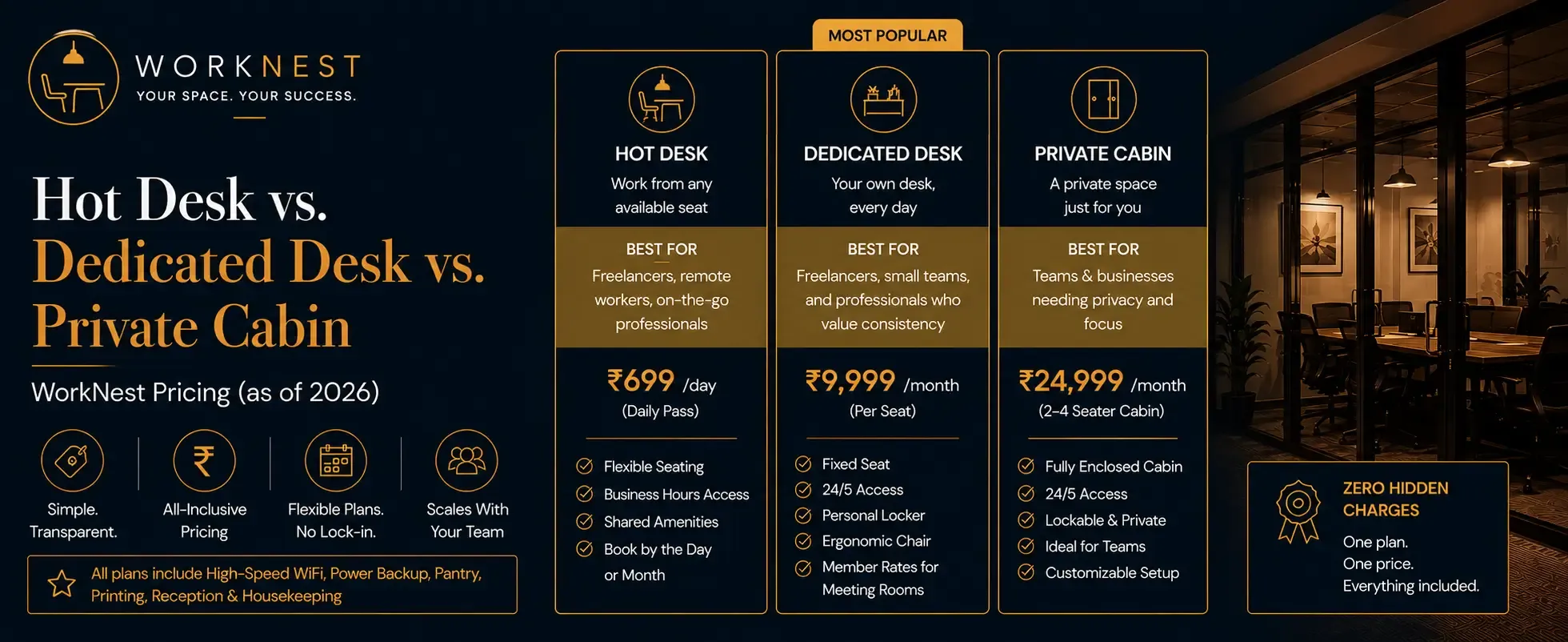
    hot desk vs dedicated desk vs private cabin WorkNest Pricing

    Feature Hot Desk Dedicated Desk Private Cabin
    Price ₹699/day ₹9,999/month ₹24,999/month
    Seat Shared, first-come Fixed, reserved Fixed, private room
    Privacy None Low Full (closed door)
    Storage None Personal locker area In-cabin storage
    Best for 1–2 people, occasional use 1–2 people, daily use 3+ people or client-facing teams

    What to Do Next

    You don’t need all five signs to justify an upgrade  two or three is usually enough. The upgrade path inside WorkNest is straightforward because you’re not switching operators: same address (E-3, 6D Engineers Colony, Mansarovar, Jaipur 302020), same team, same space with a 4.8 Google rating and a 91% renewal rate among members who’ve made this exact move.

    Start by tracking which sign shows up most. Is it daily booking stress, privacy needs, storage, meeting frequency, or team culture? That answer tells you whether a Dedicated Desk or Private Cabin fits better.

    From there, WorkNest’s team responds to upgrade requests within 30 minutes on average  so you can move from hot desk to a private setup without downtime.

    If your startup has outgrown the hot desk, the fastest fix is inside the space you already know, not a new provider search.

    FAQs

    Q: How do I know if my startup has outgrown the hot desk?

    A: Two or more signs  daily desk-booking stress, need for private calls, storage problems, frequent meeting-room bookings, or a team wanting a fixed home base  mean it’s time to upgrade.

    Q: What’s the difference between a Dedicated Desk and a Private Cabin at WorkNest?

    A: A Dedicated Desk (₹9,999/month) is a fixed, reserved seat in a shared area. A Private Cabin (₹24,999/month) is a fully enclosed private room, better suited to teams of three or more or client-facing work.

    Q: Is it cheaper to upgrade from Hot Desk to Dedicated Desk?

    A: Yes, if used daily. Hot Desk at ₹699/day costs about ₹13,980 for a 20-day work month, versus a flat ₹9,999/month for a Dedicated Desk.

    Q: Can I use a Meeting Room instead of upgrading to a Private Cabin?

    A: For occasional needs, yes. But if you’re booking a Meeting Room (₹799/hour) three or more times a week, a Private Cabin is usually the more cost-effective, always-available option.

    Q: Do I have to switch coworking operators to get a private office?

    A: No. WorkNest members can upgrade from Hot Desk to Dedicated Desk or Private Cabin within the same location  no re-onboarding or new address.

    Q: How fast can I upgrade my plan at WorkNest?

    A: WorkNest’s team typically responds to upgrade requests within 30 minutes.

    Q: What size team needs a Private Cabin instead of a Dedicated Desk?

    A: Teams of three or more, or any team handling frequent client calls or confidential work, generally benefit more from a Private Cabin.
  • Is a Coworking Space Worth It for Startups?

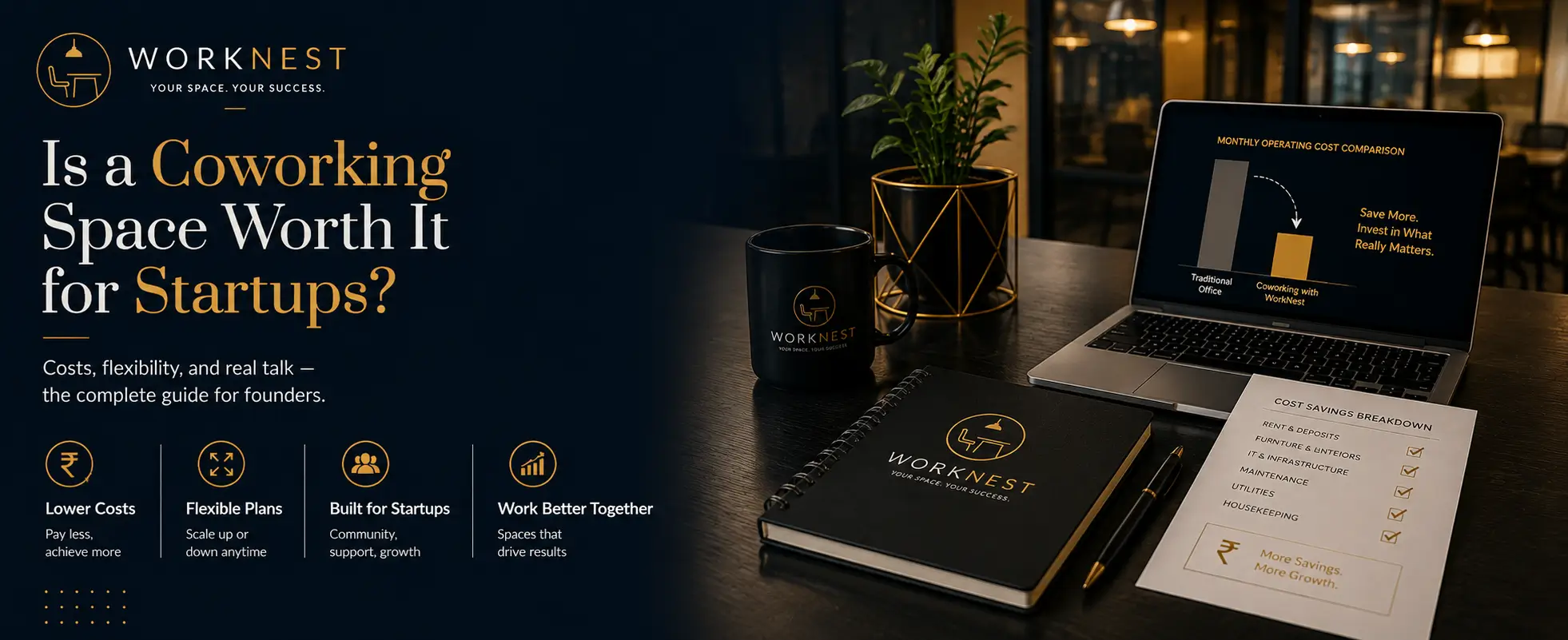
    Is a Coworking Space Worth It for Startups?

    Yes, a coworking space is worth it for startups if you need to move fast, keep fixed costs low, and avoid locking cash into furniture, Wi-Fi setup, or a multi-year lease. For most early-stage teams in Jaipur, that “if” applies more often than not – but not always, and the exceptions matter as much as the rule.

    As of 2026, WorkNest in Mansarovar has hosted more than 500 businesses through exactly this decision. Some outgrew a hot desk in months. Others stayed on a dedicated desk for years. The difference usually came down to three things: cash runway, team size, and how often the founder needed a fixed address clients could walk into.

    This guide breaks down the real cost case, the flexibility case, and the specific situations where a traditional office still wins – using actual Jaipur pricing, not US-market averages.

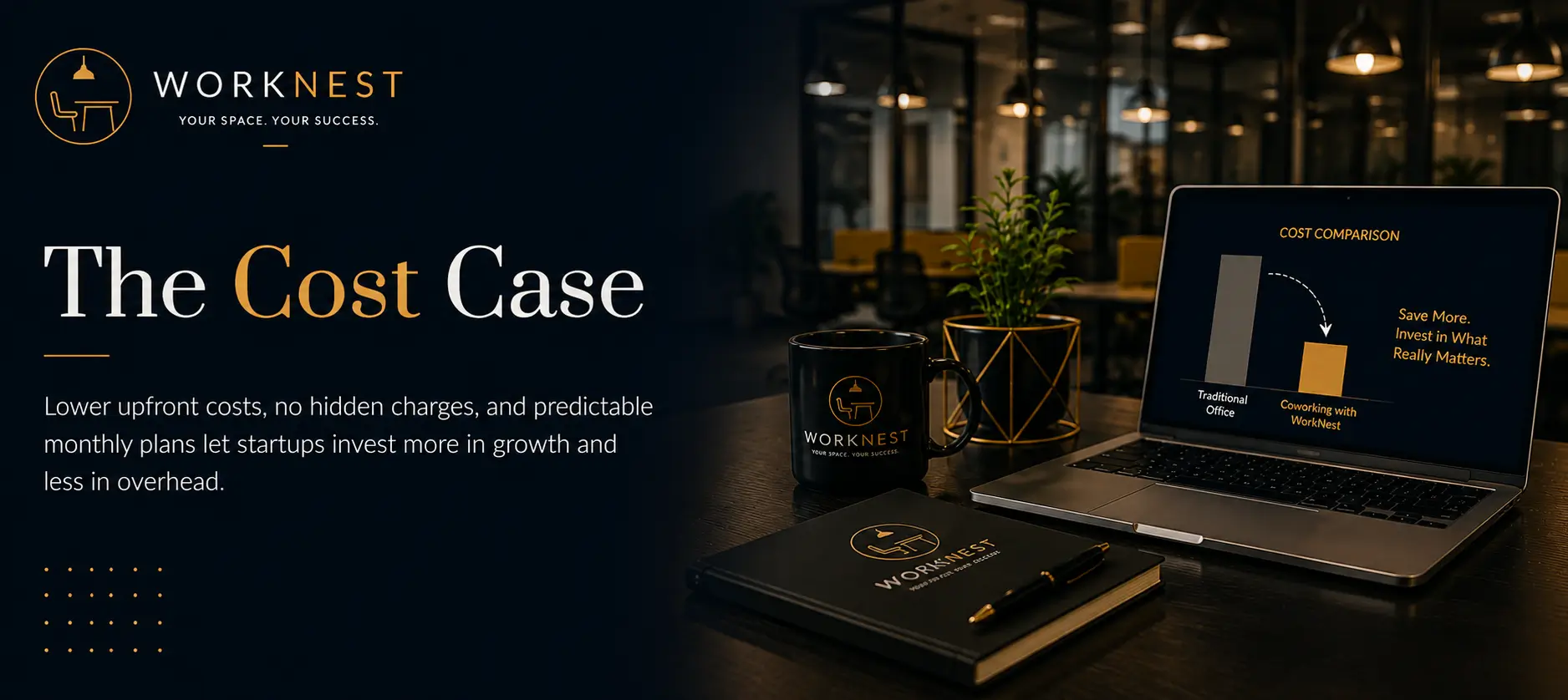
    The Cost Case

    the cost case

    A coworking space for startups in Jaipur removes almost every upfront cost a traditional office demands. You’re not paying a security deposit, buying desks, wiring internet, or hiring someone to manage the pantry.

    At WorkNest, the entry point is a Hot Desk at ₹699/day – useful for testing a location before committing further. Most early teams move to a Dedicated Desk at ₹9,999/month once they need a fixed seat. Teams that need a closed room for client calls or compliance-sensitive work choose a Private Cabin at ₹24,999/month. Meeting rooms are billed separately at ₹799/hour, so you only pay for client-facing space when you actually use it.

    Compare that to a traditional small office in Mansarovar-adjacent commercial areas. Estimated – verify before publishing: a 400–500 sq. ft. commercial space typically runs ₹35,000–₹55,000/month in rent alone, before a refundable deposit (often 6–10 months’ rent), furniture, AC installation, internet setup, and a housekeeping or admin hire. For a 4-person startup, that can mean ₹1.5–3 lakh in upfront cash before day one – cash most seed-stage founders would rather spend on product or payroll.

    Startup office cost savings here aren’t marginal. A 4-person team on Dedicated Desks at WorkNest pays roughly ₹40,000/month total, with zero deposit and zero furniture spend. That’s the core of coworking ROI for startups: capital stays in the business instead of sitting in a landlord’s deposit account.

    Cost Component Traditional Office (Estimated) WorkNest Coworking
    Upfront deposit ₹2.1–5.5 lakh (6–10 months rent) ₹0
    Furniture & setup ₹1–2 lakh Included
    Monthly rent (4-person team) ₹35,000–55,000 ~₹40,000 (4 Dedicated Desks)
    Internet, maintenance, admin Separate hire/cost Included
    Meeting room access Built into rent (fixed) ₹799/hour (pay-per-use)
    Minimum commitment Usually 11-month lease Monthly

    Table note: Traditional office figures are estimated averages for Jaipur commercial space and should be verified against current local listings before publishing.

    The Flexibility Case

    the flexibility case

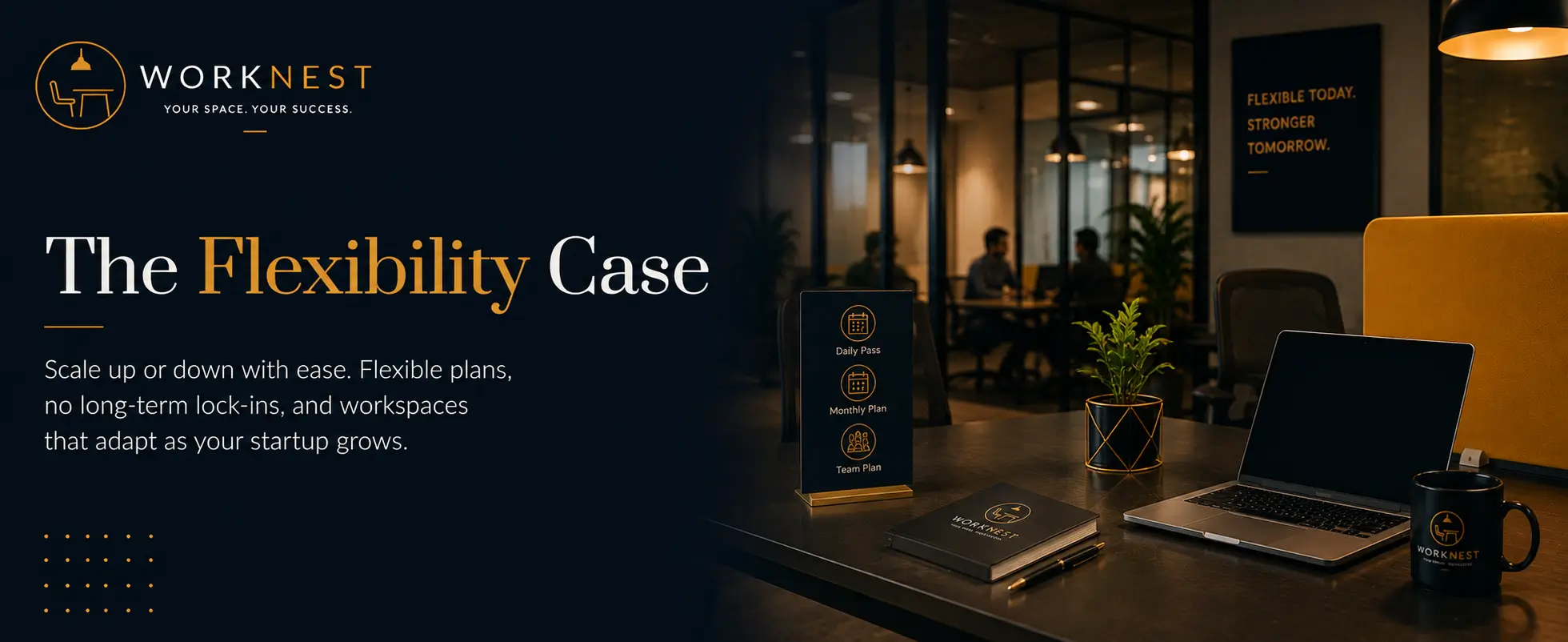
    Cost is only half the argument. The bigger reason coworking wins for early-stage teams is that startup headcount rarely moves in a straight line.

    A traditional lease locks you into one configuration for 11 months or more. If you hire five people in a quarter, you’re either cramped or paying for empty desks you signed up for a year ago. A coworking model lets you scale desk count up or down as hiring and revenue actually happen – which matters most in the first 18–24 months, when a founder genuinely doesn’t know if the team will be 3 people or 15 by next quarter.

    This is when to get an office for a startup matters most: the moment your team size is still a forecast, not a fact. Flexible desks fit that moment better than a lease. WorkNest’s response time for account and booking queries is under 30 minutes. So scaling desk count up before a client visit or a new hire’s start date doesn’t need weeks of lead time, unlike a lease renegotiation.

    There’s a trust signal worth noting too. WorkNest holds a 4.8 Google rating in Mansarovar, Jaipur, backed by more than 500 businesses served to date. It also has a 91% renewal rate among current members. That means the large majority of teams that try it choose to stay, rather than treating it as a stopgap.

    When It Might Not Be Worth It

    when it might not be worth it

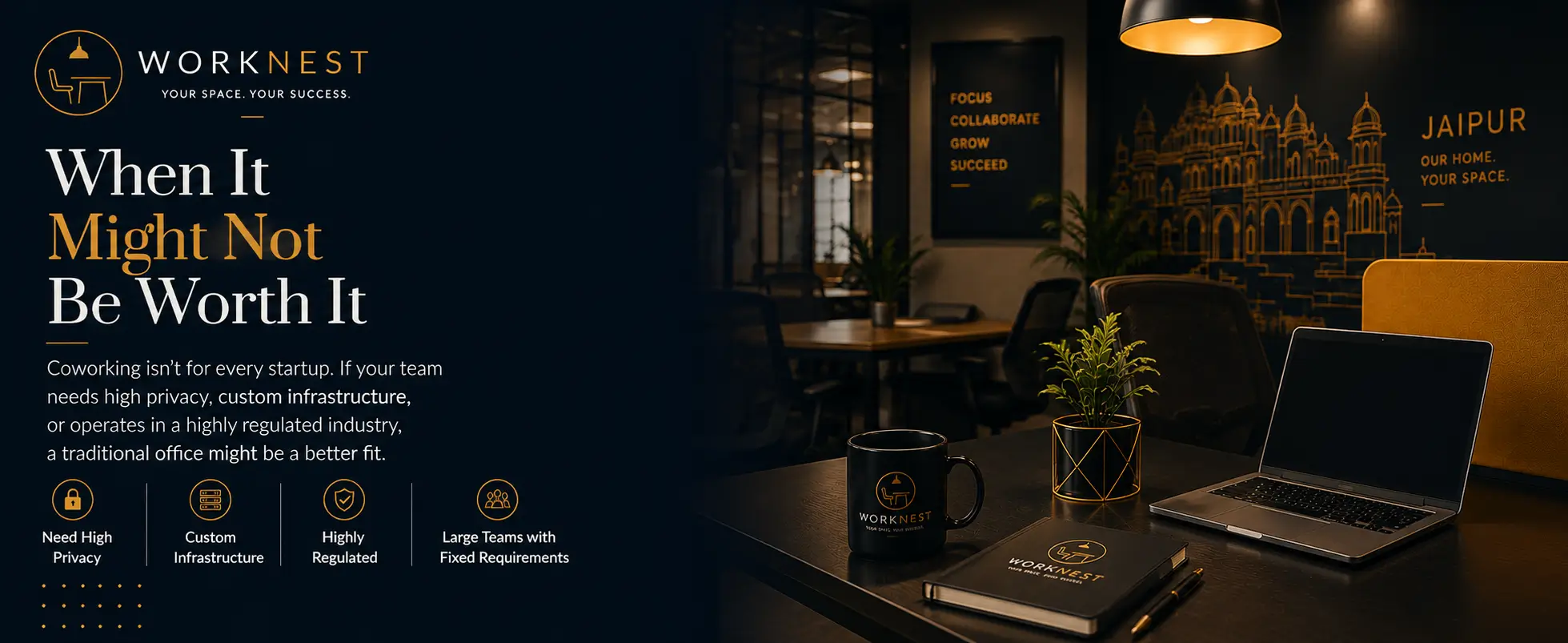
    No, coworking is not always the right call. Three situations make a traditional office, or staying remote, the better fit:

    You’ve hit 15–20+ people with a stable headcount.

    Once hiring plans are confirmed and your team size isn’t expected to swing for 12+ months, the per-desk economics of coworking start to lose their edge over a direct lease, especially if you need a fully custom floor layout.

    You need heavy physical infrastructure.

    Hardware startups running lab equipment, manufacturing testing, or anything requiring specialized electrical or structural build-outs won’t fit a shared floor plan.

    You’re fully remote by design and rarely meet clients in person.

    If your team is distributed and client meetings happen over video, a Hot Desk used occasionally may cover your needs – a Dedicated Desk or Private Cabin would be paying for space you don’t use.

    If none of these describe your startup, the flexibility and cost case above will likely outweigh the drawbacks.

    A Real Example

    Aditi Rao, Founder, is one of the 500+ businesses WorkNest has hosted in Mansarovar. Her path reflects the pattern this guide describes: starting small and flexible, then scaling as the team grew, without a lease renegotiation or a locked-in deposit slowing things down.

    That kind of named, attributable member outcome carries more weight than a hypothetical case study. It’s also consistent with WorkNest’s 91% renewal rate – most founders who start this way choose to stay rather than move to a traditional lease later.

    Note for the WorkNest team: if Aditi Rao has given a specific, publishable quote (e.g., which desk plan she started on, team size at the time, or a direct line about her experience), swap it in here – a verbatim first-hand quote will strengthen this section’s GEO and E-E-A-T value further.

    Conclusion

    So, is a coworking space worth it for startups? Yes – if your team size is still changing, your cash needs to go into product and payroll rather than deposits and furniture, and you need a professional address without an 11-month commitment. It’s worth a second look only if you’ve already stabilized headcount above 15–20 people or need infrastructure a shared floor can’t offer.

    The clearest way to know which side of that line your startup sits on is to walk the space and price it against your actual headcount plan – not a generic estimate.

    Ready to see if it fits your team? Book a Free Office Tour at WorkNest, E-3, 6D Engineers Colony, Mansarovar, Jaipur 302020.

    FAQs

    Q1: Is a coworking space worth it for a 2–3 person startup?

    Yes. At this size, a Hot Desk (₹699/day) or a couple of Dedicated Desks (₹9,999/month each) usually costs less per month than the cheapest traditional office lease in Jaipur, with no deposit.

    Q2: What’s the real cost difference between coworking and a traditional office in Jaipur?

    A 4-person team pays around ₹40,000/month total at WorkNest on Dedicated Desks, versus an estimated ₹35,000–55,000/month rent alone for a small traditional office – before deposit and furniture. (Estimated traditional-office figure – verify before publishing.)

    Q3: When should a startup stop coworking and get its own office?

    Once headcount is stable above roughly 15–20 people for 12+ months, or the business needs infrastructure a shared floor can’t support (labs, manufacturing, heavy equipment).

    Q4: Does WorkNest offer flexible terms for early-stage startups?

    Yes. Hot Desks and Dedicated Desks are available monthly with no long-term lease, and Meeting Rooms are billed hourly (₹799/hour) so you only pay when you need client-facing space.

    Q5: How fast can a startup scale desks up at WorkNest if it hires quickly?

    WorkNest’s team responds to booking and account requests within 30 minutes, which makes adding desks ahead of a new hire’s start date faster than renegotiating a lease.

    Q6: Is coworking cheaper than working from home for a startup?

    Not necessarily on pure cost, but a coworking space adds a professional address, meeting rooms, and in-person team collaboration – factors that matter once a startup starts meeting clients or investors regularly.

    Q7: What does WorkNest’s renewal rate say about long-term value?

    WorkNest has a 91% renewal rate among current members, suggesting most teams that try coworking choose to stay rather than switch to a traditional lease.