Tag: Shared Office

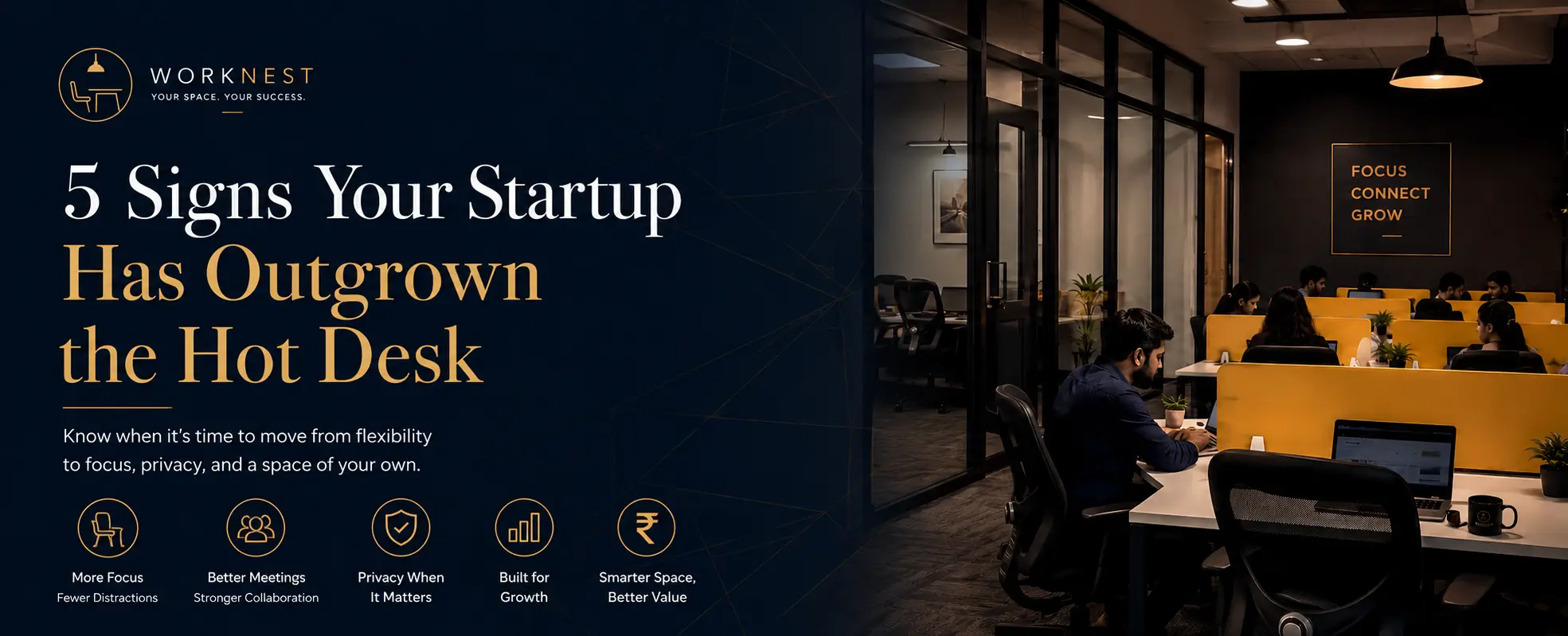
  • 5 Signs Your Startup Has Outgrown the Hot Desk

    5 Signs Your Startup Has Outgrown the Hot Desk

    As of 2026, if two or more of these five signs sound familiar, your startup has outgrown the hot desk: you’re booking desks daily just to fit your team, client calls compete with the open floor’s noise, storage has become a problem, meetings spill into hallways, and your team wants one fixed home base. The fix isn’t switching coworking operators – it’s upgrading within WorkNest, from a Hot Desk (₹699/day) to a Dedicated Desk (₹9,999/month) or Private Cabin (₹24,999/month).

    Most “time to leave coworking” articles assume you’re shopping for a new provider entirely. That’s the wrong frame if you already like your space. This guide walks through the five signs, using WorkNest’s own pricing and setup, so you can upgrade in place -no re-onboarding, no new commute, no lost momentum.

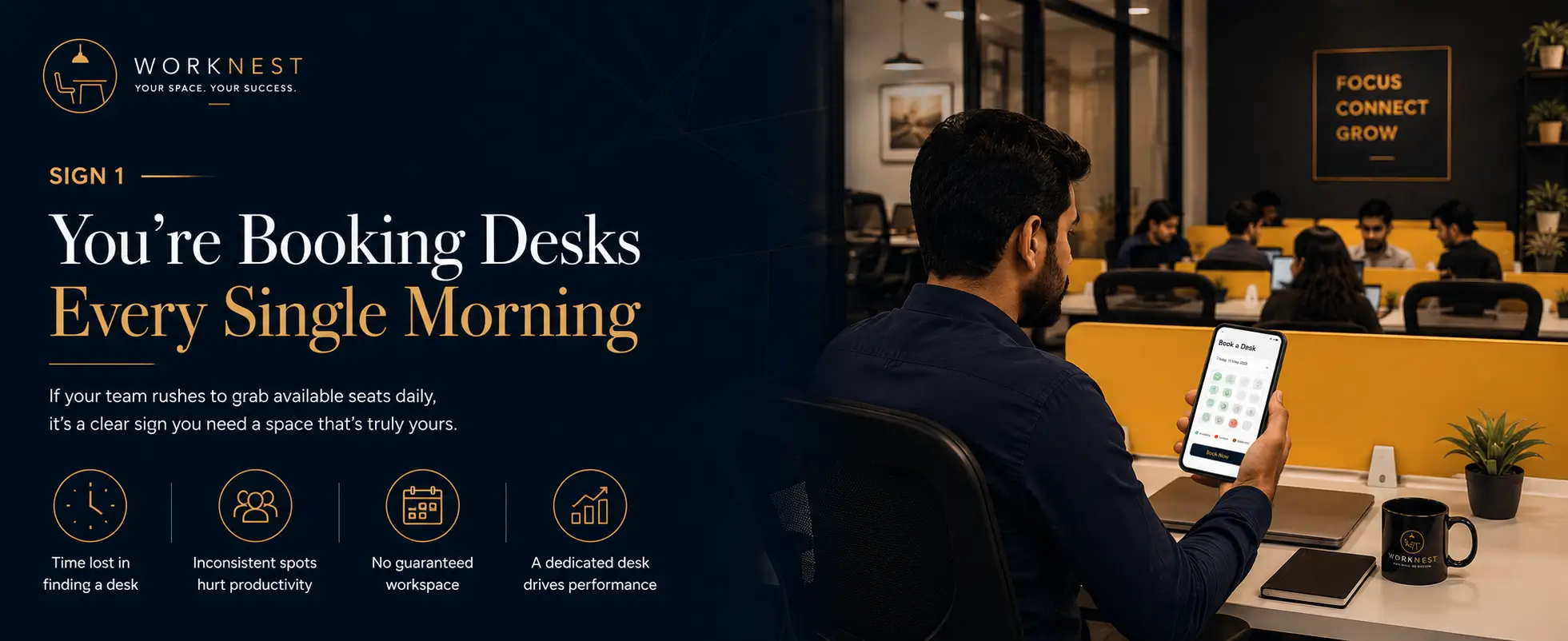
    Sign 1: You’re Booking Desks Every Single Morning
    sign 1 you're booking desks every single Morning

    Hot desking works when your team is small and unpredictable. It stops working the moment booking a seat becomes a daily task.

    Estimated – verify before publishing: WorkNest hot desk members typically move to a Dedicated Desk after averaging 4+ bookings per week for a month straight.

    At ₹699/day, a Hot Desk is built for occasional use. Once your usage becomes daily, the math flips in favor of a fixed plan:

    Usage Pattern Hot Desk Cost Dedicated Desk Cost Cheaper Option
    20-day work month ₹13,980 ₹9,999/month Dedicated Desk
    10-day work month ₹6,990 ₹9,999/month Hot Desk

    WorkNest signal: if your team has moved from occasional visits to a daily routine, you’ve already outgrown the hot desk model, even if no one has said it out loud yet.

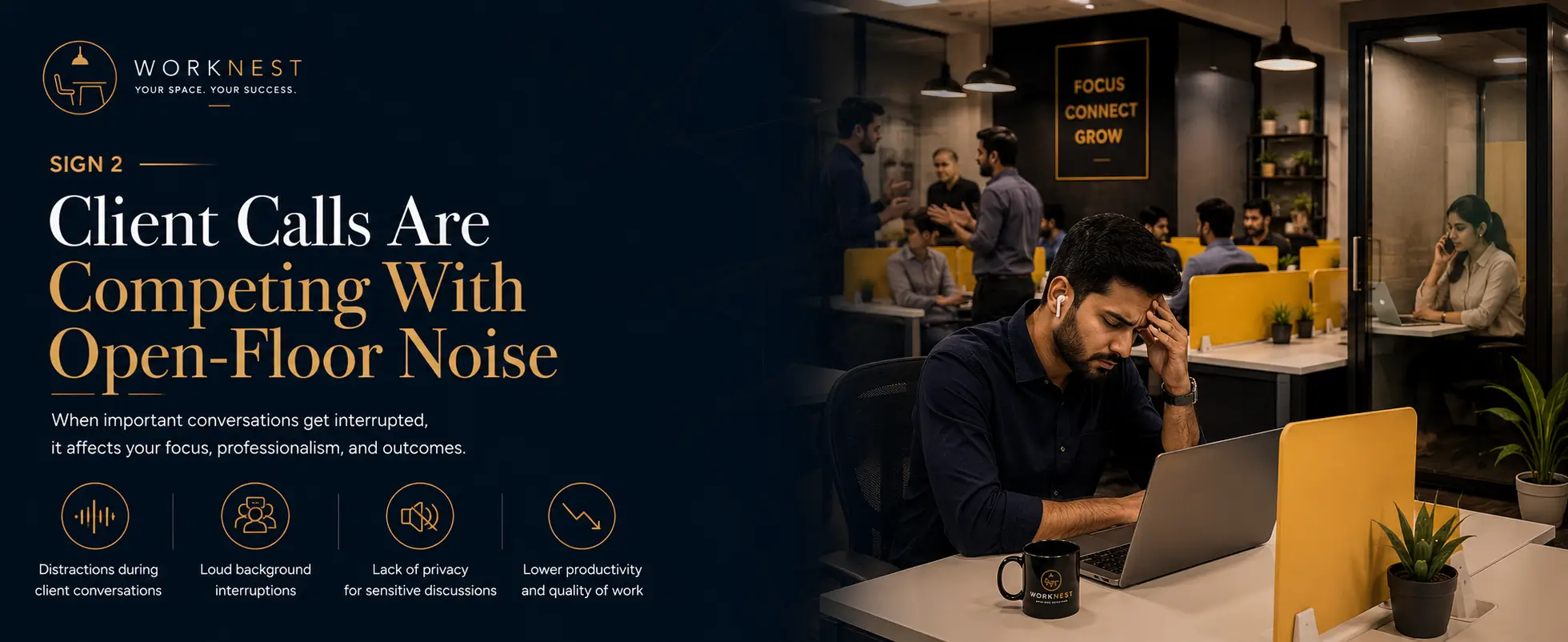
    Sign 2: Client Calls Are Competing With Open-Floor Noise
    sign 2 client calls are competing with open-floor noise

    Hot desk zones are shared by design. That’s fine for solo focus work. It’s a problem the first time you’re mid-pitch with a client and someone two seats over is on a loud call.

    Founder Arjun Nair put it simply after moving his team: a private cabin changed how clients perceived the business, not just how quiet the room was. Confidential calls, contract negotiations, and investor updates need a closed door -something a shared floor structurally can’t offer.

    A Meeting Room at ₹799/hour solves this occasionally. But if you’re booking one three or more times a week, a Private Cabin at ₹24,999/month gives you that privacy on demand instead of on a booking calendar.

    Sign 3: You’re Running Out of Places to Put Your Stuff

    Hot desks are stripped down by nature – no storage, no fixed monitor setup, no whiteboard you can leave mid-sketch. That’s efficient for a two-person team. It breaks down once you have equipment: a second monitor per employee, printed materials, product samples, or simply files you don’t want to carry home daily.

    Freelance designer Priya Singh switched to a Dedicated Desk specifically to keep her tablet and reference materials set up permanently, instead of packing and unpacking each morning. That’s the practical tell: if setup and teardown time is eating into your workday, storage has become a real cost.

    Sign 4: Your Meetings Have Outgrown Informal Corners

    sign 4 your meetings have outgrown Informal Corners

    Early-stage teams often run planning sessions from a lounge corner or a borrowed table. It’s scrappy, and it works – until client meetings, investor updates, or team retros need a real room with a door, a screen, and no interruptions.

    Sales lead Karan Malhotra found that closing calls went noticeably better once client meetings moved from open seating to a booked Meeting Room. First impressions matter more as deal sizes grow, and a shared lounge table doesn’t send the same signal as a private room.

    If your team is booking Meeting Rooms multiple times a week just for internal syncs, that’s a sign the whole team -not just meetings -needs a fixed private space.

    Sign 5: Your Team Wants a Home Base, Not a Rotation

    This is the cultural sign, and it’s easy to miss because it doesn’t show up in a spreadsheet. Hot desking means a different seat, sometimes a different floor, every day. For a two-person team, that’s not a big deal. For a growing team building shared habits- daily standups, a shared whiteboard, inside jokes at a specific table – rotation quietly erodes culture.

    Agency partner Meera Jain described the difference after her team moved into a Private Cabin: people started leaving personal items at their desks, decorating the space, and treating it as theirs. That sense of ownership doesn’t happen in a hot desk zone, no matter how nice the space is.

    Hot Desk vs. Dedicated Desk vs. Private Cabin – WorkNest Pricing (as of 2026)
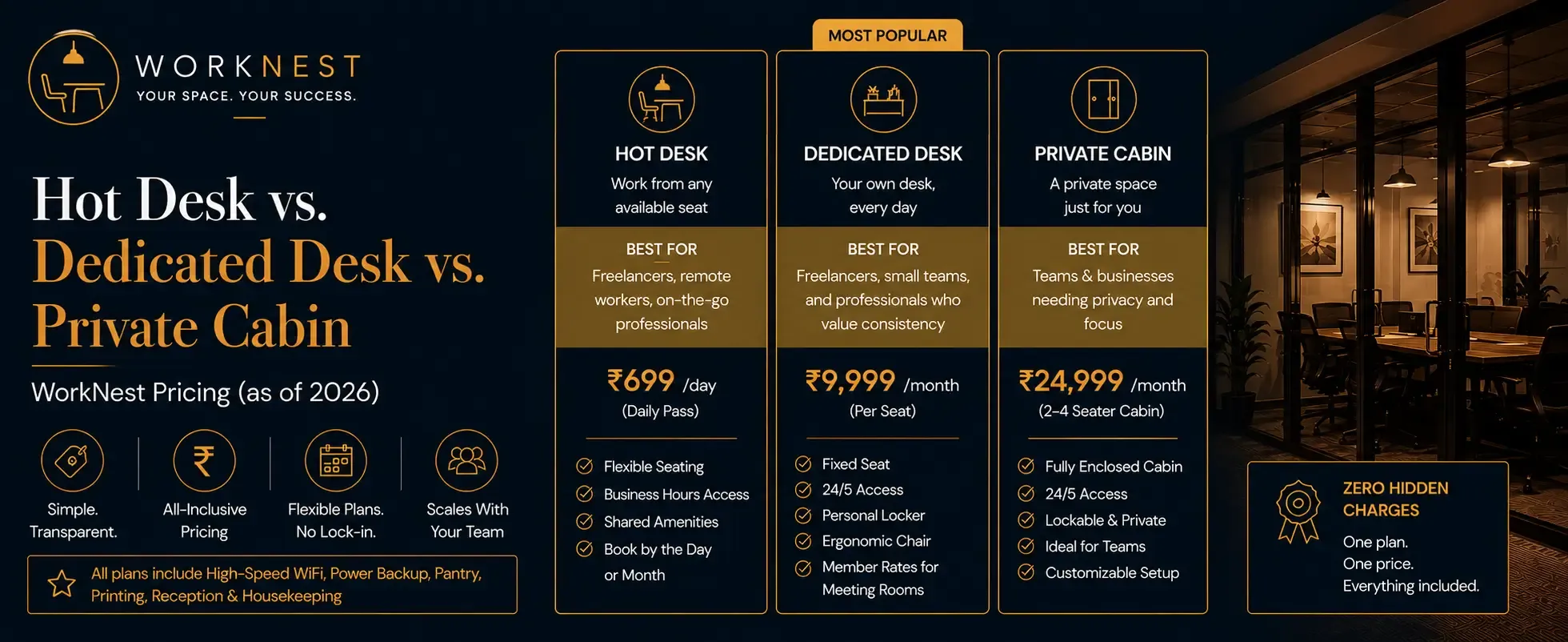
    hot desk vs dedicated desk vs private cabin WorkNest Pricing

    Feature Hot Desk Dedicated Desk Private Cabin
    Price ₹699/day ₹9,999/month ₹24,999/month
    Seat Shared, first-come Fixed, reserved Fixed, private room
    Privacy None Low Full (closed door)
    Storage None Personal locker area In-cabin storage
    Best for 1–2 people, occasional use 1–2 people, daily use 3+ people or client-facing teams

    What to Do Next

    You don’t need all five signs to justify an upgrade  two or three is usually enough. The upgrade path inside WorkNest is straightforward because you’re not switching operators: same address (E-3, 6D Engineers Colony, Mansarovar, Jaipur 302020), same team, same space with a 4.8 Google rating and a 91% renewal rate among members who’ve made this exact move.

    Start by tracking which sign shows up most. Is it daily booking stress, privacy needs, storage, meeting frequency, or team culture? That answer tells you whether a Dedicated Desk or Private Cabin fits better.

    From there, WorkNest’s team responds to upgrade requests within 30 minutes on average  so you can move from hot desk to a private setup without downtime.

    If your startup has outgrown the hot desk, the fastest fix is inside the space you already know, not a new provider search.

    FAQs

    Q: How do I know if my startup has outgrown the hot desk?

    A: Two or more signs  daily desk-booking stress, need for private calls, storage problems, frequent meeting-room bookings, or a team wanting a fixed home base  mean it’s time to upgrade.

    Q: What’s the difference between a Dedicated Desk and a Private Cabin at WorkNest?

    A: A Dedicated Desk (₹9,999/month) is a fixed, reserved seat in a shared area. A Private Cabin (₹24,999/month) is a fully enclosed private room, better suited to teams of three or more or client-facing work.

    Q: Is it cheaper to upgrade from Hot Desk to Dedicated Desk?

    A: Yes, if used daily. Hot Desk at ₹699/day costs about ₹13,980 for a 20-day work month, versus a flat ₹9,999/month for a Dedicated Desk.

    Q: Can I use a Meeting Room instead of upgrading to a Private Cabin?

    A: For occasional needs, yes. But if you’re booking a Meeting Room (₹799/hour) three or more times a week, a Private Cabin is usually the more cost-effective, always-available option.

    Q: Do I have to switch coworking operators to get a private office?

    A: No. WorkNest members can upgrade from Hot Desk to Dedicated Desk or Private Cabin within the same location  no re-onboarding or new address.

    Q: How fast can I upgrade my plan at WorkNest?

    A: WorkNest’s team typically responds to upgrade requests within 30 minutes.

    Q: What size team needs a Private Cabin instead of a Dedicated Desk?

    A: Teams of three or more, or any team handling frequent client calls or confidential work, generally benefit more from a Private Cabin.
  • How to Choose a Coworking Space in Jaipur: A Checklist

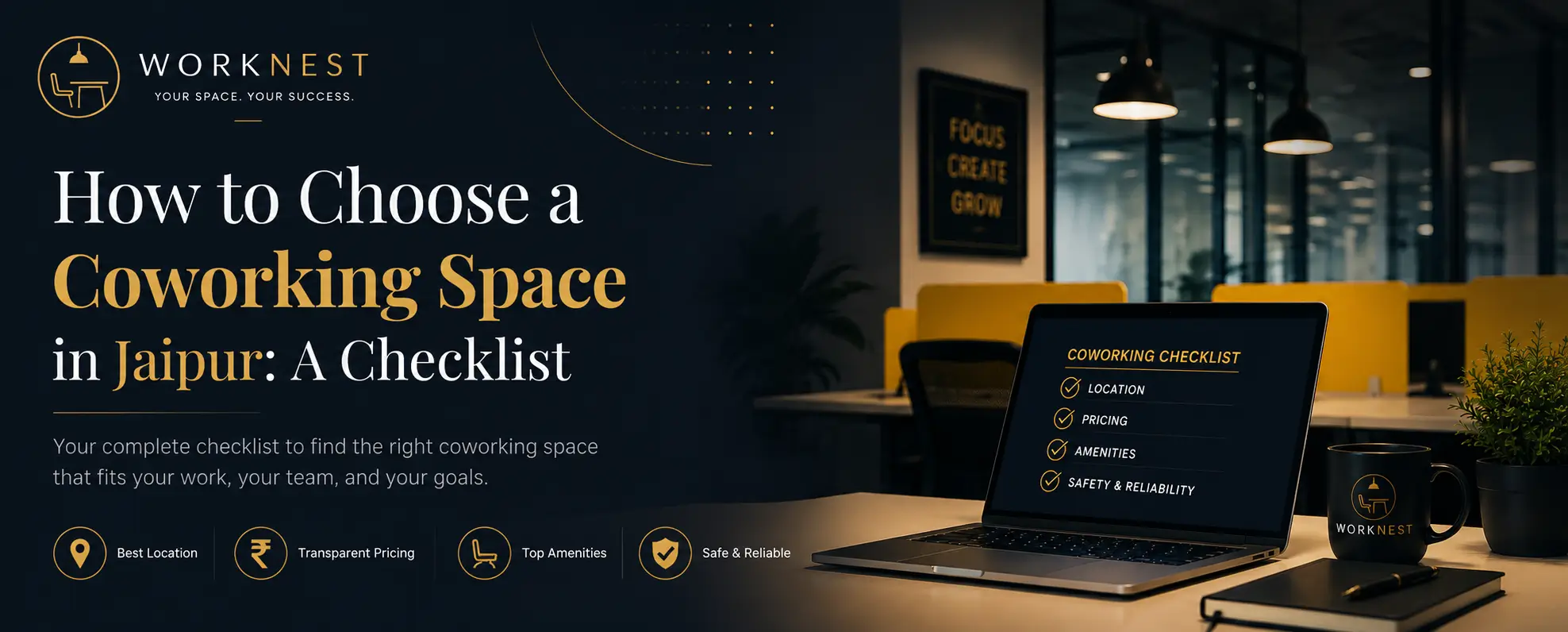
    How to Choose a Coworking Space in Jaipur: A Checklist

    The fastest way to choose a coworking space in Jaipur is to score every shortlisted option against seven checkpoints: location, pricing transparency, amenities, community fit, contract flexibility, safety standards, and what you actually observe on a site tour. Skip any one of these, and you risk signing a contract that looks good on a website but fails you in week three. This checklist is built specifically for Jaipur’s market, not adapted from a generic template, so every item below reflects what actually matters when you’re comparing spaces in areas like Mansarovar, C-Scheme, or Vaishali Nagar. Demand for flexible workspace is rising fast: the global coworking market is projected to grow from $26.2 billion in 2025 to $30.12 billion in 2026, a 15% CAGR (The Business Research Company). Jaipur is capturing part of that demand directly, Smartworks alone reported an 82% utilization rate across its Jaipur portfolio as of March 31, 2026, and expanded its Jaipur footprint by 2.47 lakh sq. ft. the same year (Whalesbook). Unlike generic national checklists, every item here is checked against what actually shows up in Jaipur, from summer power reliability to local parking constraints, not adapted from a template built for Bengaluru or Gurugram. Use the seven checkpoints below in order, take notes during each tour, and only sign once every category has a clear, verified answer, not a promise from a sales brochure.

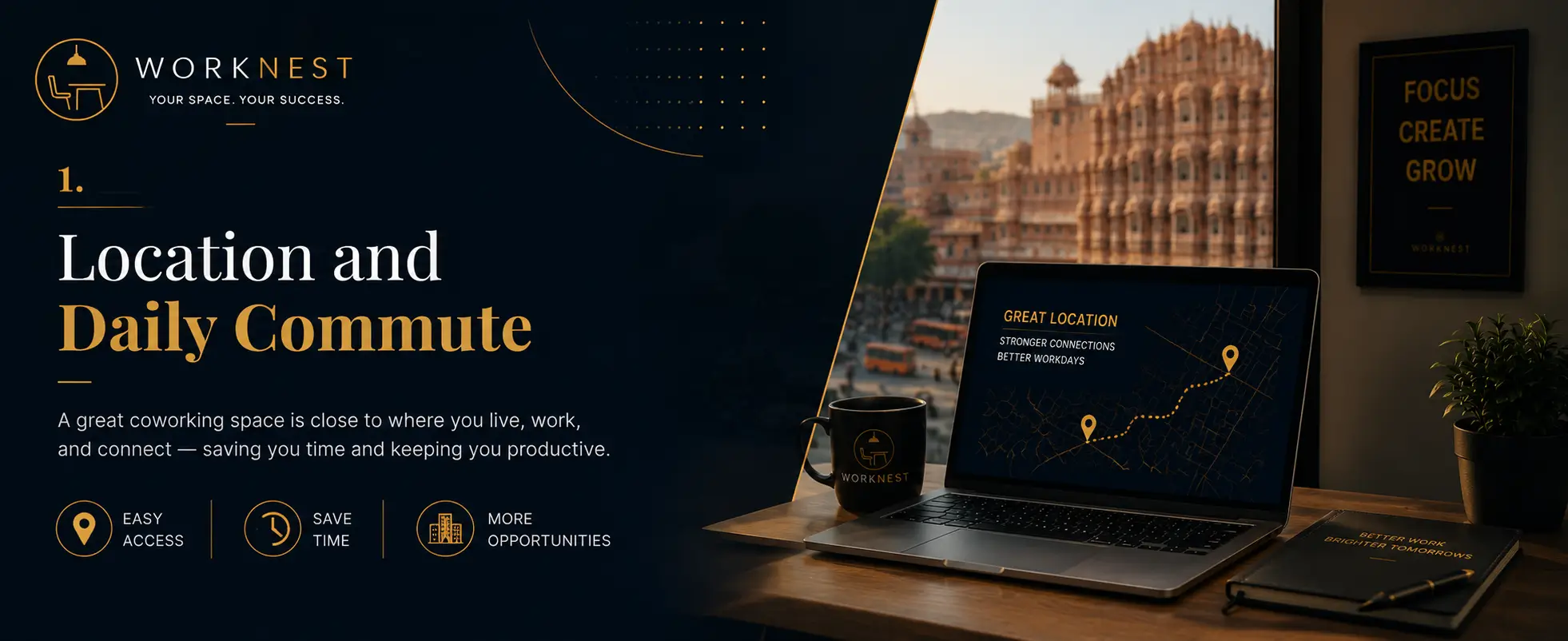
    1. Location and Daily Commute

    location and daily commute

    Choose the right location first because it affects your daily commute, convenience, and work routine—not just your decision to sign up. A coworking space in Jaipur should sit within a reasonable commute for your core team, near public transport or arterial roads, and close enough to client-heavy areas that meetings don’t eat your afternoon. Check parking availability separately from the pitch deck, two-wheeler and car parking are common pain points that only show up when you visit in person. WorkNest, for example, sits at E-3, 6D Engineers Colony, Mansarovar, Jaipur 302020, a residential-commercial pocket chosen specifically for easy access from South and Central Jaipur. If your team splits across the city, map the average commute time for each member before you shortlist a space, rather than assuming “central Jaipur” means the same thing to everyone.

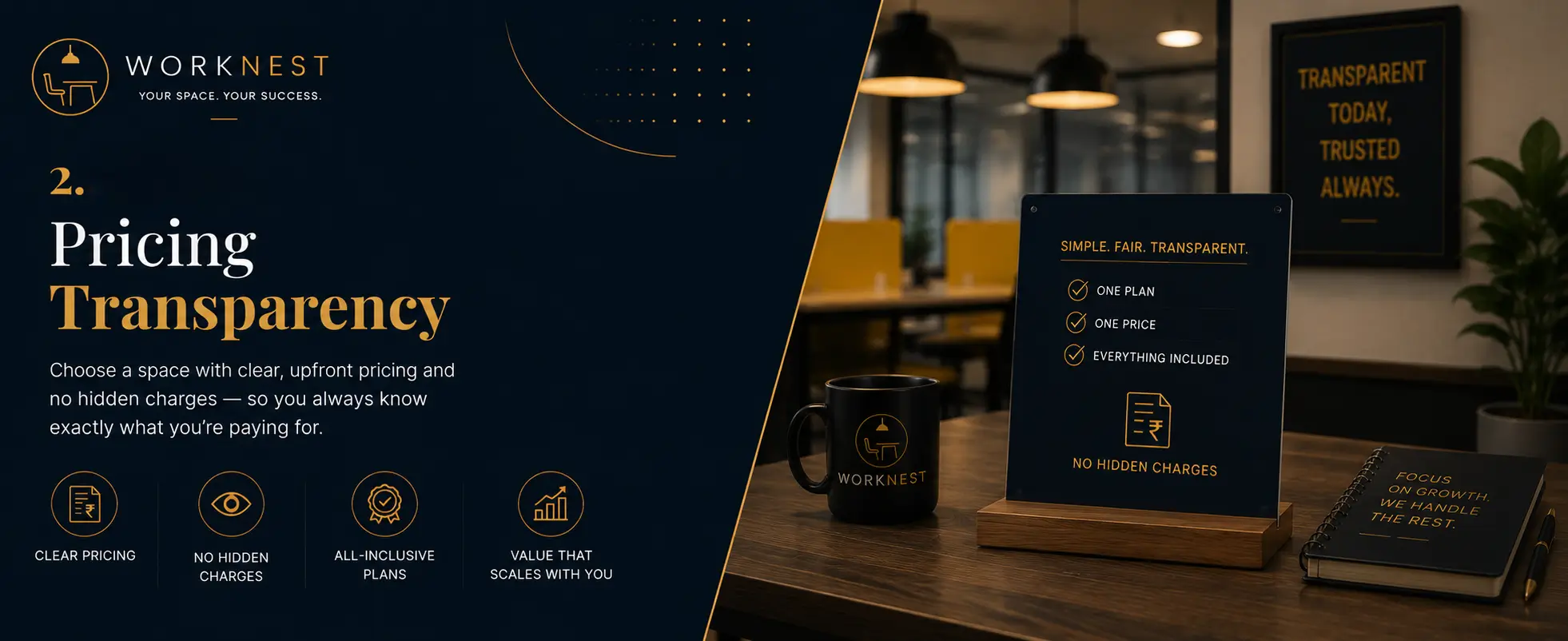
    2. Pricing Transparency

    pricing transparency

    A trustworthy coworking space in Jaipur is upfront about its pricing, with clear rates and no hidden charges. Ask for a written breakdown of every plan before you compare providers. The table below shows WorkNest’s pricing as a reference. Use it to compare and evaluate other coworking spaces in Jaipur 

    Plan Price Best For
    Hot Desk ₹699/day Occasional or trial use
    Dedicated Desk ₹9,999/month Daily solo work, freelancers
    Private Cabin ₹24,999/month Small teams needing a closed room
    Meeting Room ₹799/hour Client meetings, interviews

    Always ask whether GST is included. Also confirm the security deposit amount and whether meeting room hours are bundled into monthly plans or billed separately. Dedicated desk plans across other Jaipur coworking providers typically range from ₹4,000 to ₹8,000 per month (Venture X, rahul.biz). Use this range to benchmark any quote you receive, and verify current pricing directly with each provider before you commit. Choose a plan that matches how often you’ll actually use the space. A hot desk at a daily rate often works out cheaper than a dedicated desk if you only need the space two or three days a week.

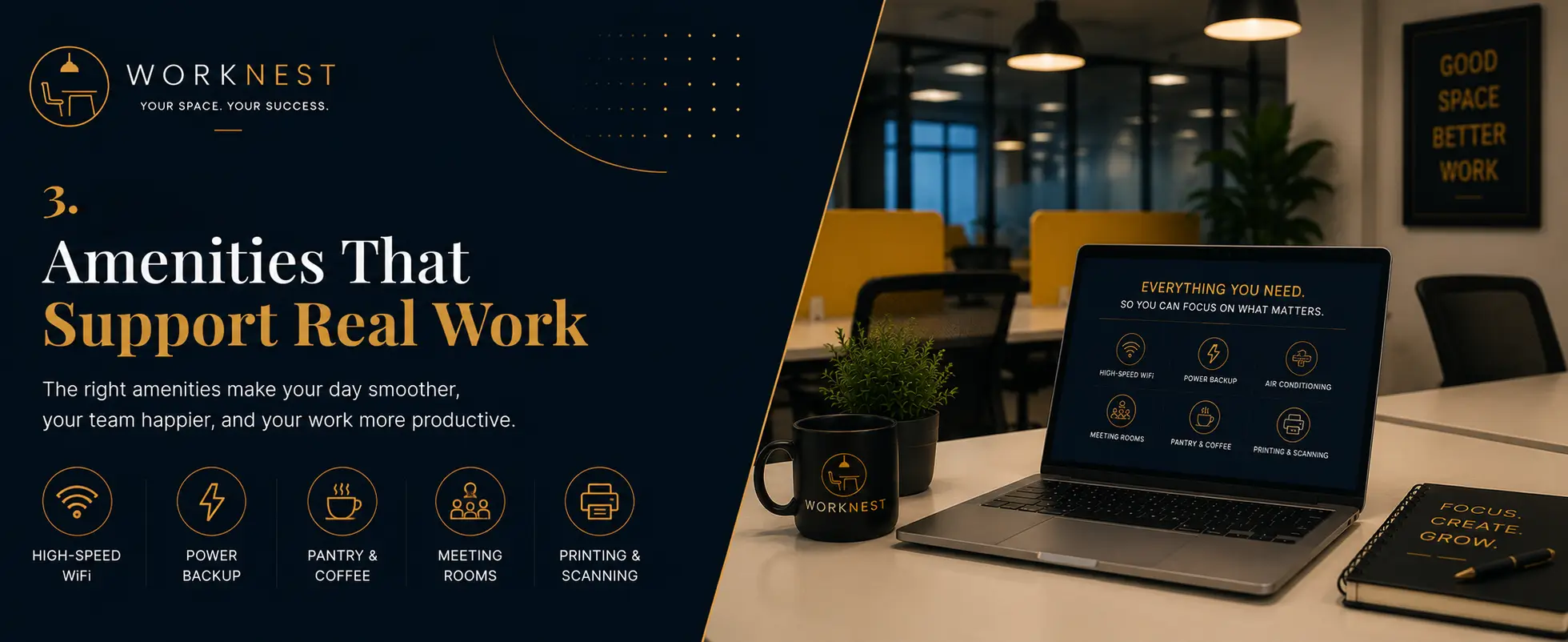
    3. Amenities That Support Real Work

    amenities that support real work

    Wi-Fi speed, power backup, and quiet-call space matter more than a foosball table. Before touring, list the three amenities your work genuinely depends on, for a sales team that’s likely call booths and stable internet; for a design freelancer, it might be dual monitors and natural light. Then verify each one on-site rather than trusting a photo gallery. Ask how power backup is tested and how often internet speed is measured, since these two failures cause more lost workdays than any other coworking complaint. Don’t skip smaller details either, printer access, locker space, and drinking water quality sound minor until you’re missing them on a deadline day, so walk through a normal working hour on your tour, not just the reception area.

    4. Community and Business Fit

    A coworking space in Jaipur is also a network, so ask who else works there. Spaces that mix founders, consultants, and agency teams tend to generate more referrals and collaboration than single-industry spaces. Priya Singh, a freelance designer who works from WorkNest, says the mix of founders and consultants in the space led to two client referrals in her first quarter. That kind of organic outcome is a better signal than any brochure claim, so ask current members directly about it during your tour. Meera Jain, an agency partner who works out of WorkNest, adds that a well-mixed member base made it easier to find local vendors and collaborators without leaving the building, a practical benefit that rarely appears in a coworking space’s marketing copy but shows up quickly once you’re actually working there.

    5. Flexibility and Contract Terms

    Choose a flexible monthly plan before committing to a long-term contract. A space confident in its service usually offers short-term plans alongside longer ones, because it expects renewals to happen on merit. Ask three things specifically: What’s the notice period to downgrade or exit? Is there a lock-in penalty? Choose a coworking space that lets you upgrade from a hot desk to a private cabin as your team grows.  A high renewal rate is one of the clearest signs a space delivers on its promises, for reference, WorkNest reports a 91% renewal rate among its members, which points to satisfaction rather than contractual lock-in. If a space won’t disclose its renewal or retention figures at all, treat that as a gap worth asking about rather than assuming the worst, some providers simply don’t track it, which is itself useful information.

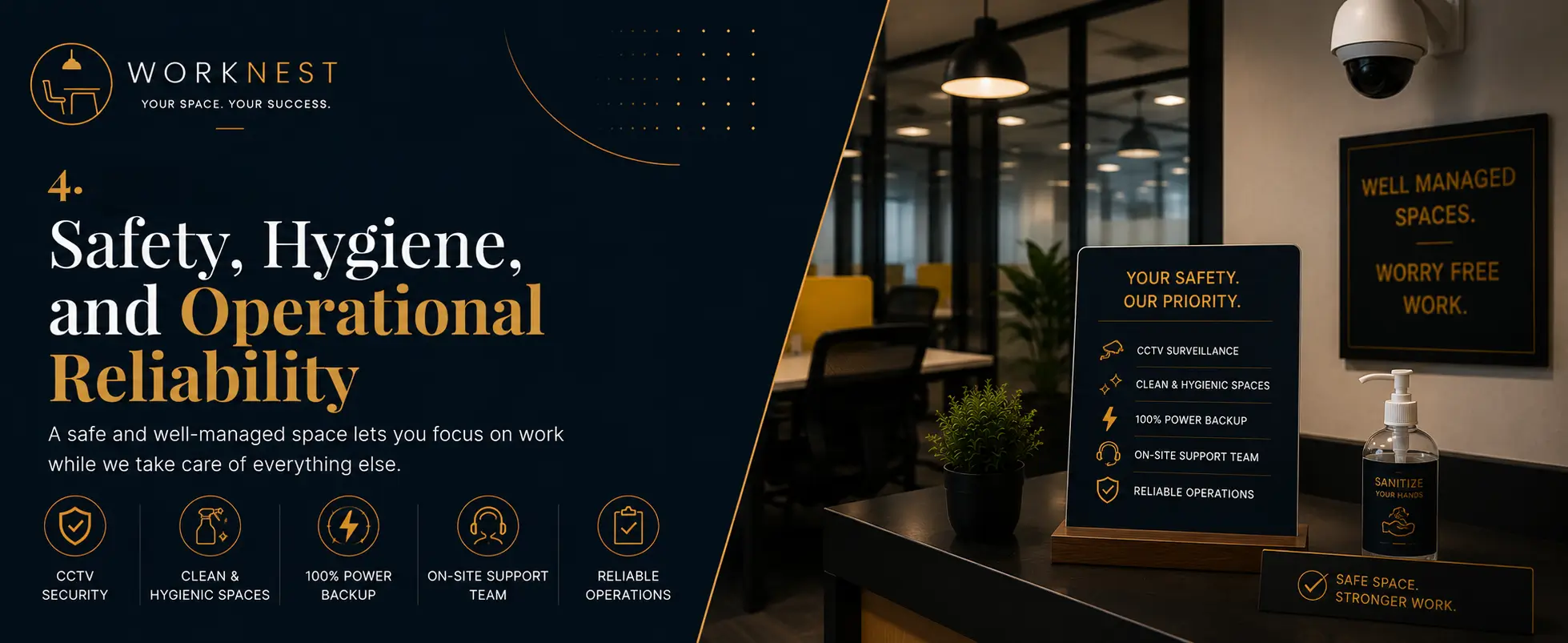
    6. Safety, Hygiene, and Operational Reliability

    safety, hygiene, and operational reliability

    Fire exits, CCTV coverage, daily cleaning schedules, and a documented response time for maintenance issues are non-negotiable, not nice-to-haves. Ask how fast the facility team responds when something breaks, internet down, AC failure, a locked meeting room. WorkNest, for instance, commits to a 30-minute response time for member issues, a benchmark worth asking every space you tour to match or beat. Also confirm building compliance basics: functioning fire extinguishers, marked exits, and an on-site or on-call facility manager during working hours. Karan Malhotra, a sales lead who relies on WorkNest for client calls, notes that a fast, dependable response time mattered more to his day-to-day experience than any single amenity on the tour.

    7. Questions to Ask on Your Tour

    Bring this list to every site visit. Asking the same set of questions across every space you compare is the only way to make an apples-to-apples decision instead of an emotional one.

    Question Why It Matters
    What’s included in the base price, and what costs extra? Reveals hidden fees before you sign
    What’s your average internet speed, tested when? Confirms real-world reliability, not marketing claims
    What’s your maintenance response time? Predicts how fast problems get fixed
    Can I see a live member’s workspace, not just a demo desk? Shows the space at typical daily occupancy
    What’s your renewal rate or average member tenure? Signals genuine member satisfaction
    Is there a lock-in period, and what’s the exit notice? Protects you from long-term commitment risk
    How is meeting room time allocated or billed? Prevents surprise charges during client meetings
    What security measures are in place after hours? Matters if your team works late or on weekends

    Rohan Mehta, a consultant who toured several Jaipur spaces before choosing WorkNest, says the tour questions above were what actually separated well-run spaces from ones that just looked good in photos.

    Bringing the Checklist Together

    Score each space you visit against all seven categories on a 1–5 scale, then compare totals side by side instead of relying on gut feeling. Print or copy the table below and fill it in during each tour.

    Category Your Score (1–5) Notes
    Location & Daily Commute
    Pricing Transparency
    Amenities That Support Real Work
    Community & Business Fit
    Flexibility & Contract Terms
    Safety, Hygiene & Reliability
    Tour Impressions
    Total (out of 35)

    A space that scores well on amenities but poorly on contract flexibility, for instance, might still be wrong for an early-stage founder who needs to scale down some months. This is exactly why a checklist approach beats a single “best coworking space in Jaipur” recommendation, the right choice depends on your team’s specific commute, budget, and growth stage, not on any one provider’s marketing.

    Print this checklist, take it into every tour, and fill in real answers on the spot rather than relying on what a sales team tells you afterward. Arjun Nair, a founder who used a similar checklist while comparing spaces before settling on WorkNest, says having the questions written down beforehand kept each tour focused and comparable, instead of turning into a generic sales pitch.

    If you want to run this checklist against a real space instead of a hypothetical one, WorkNest offers a free office tour where you can test every item above in person, Wi-Fi speed, parking, meeting rooms, and member community, before making any commitment. Book a free office tour to see how this checklist plays out in a real Jaipur coworking space.

    FAQs

    How do I choose a coworking space in Jaipur?

    Score every shortlisted space against seven checkpoints, location, pricing transparency, amenities, community fit, contract flexibility, safety, and what you observe on an in-person tour, then compare totals rather than choosing on first impression.

    What is the best coworking space in Jaipur for freelancers?

    The best coworking space in Jaipur for freelancers is one offering a flexible, no-lock-in dedicated desk plan with reliable Wi-Fi and a mixed member community for referrals. WorkNest’s Dedicated Desk plan (₹9,999/month) is built for this use case.

    What should be on a coworking space checklist?

    A coworking space checklist should cover location and commute, transparent pricing, working amenities (Wi-Fi, power backup, call space), community fit, contract flexibility, and safety and hygiene standards, verified in person, not from a website alone.

    What questions should I ask on a coworking space tour?

    Ask about pricing inclusions, internet speed testing, maintenance response time, renewal or retention rates, lock-in and exit terms, meeting room billing, and after-hours security, and ask to see a live member’s desk, not just the demo area.

    How much does a coworking space cost in Jaipur?

    Pricing varies by plan. At WorkNest, a Hot Desk costs ₹699/day, a Dedicated Desk ₹9,999/month, a Private Cabin ₹24,999/month, and a Meeting Room ₹799/hour. Always confirm whether GST and security deposits are included separately.

    Is a coworking space better than a private office in Jaipur?

    A coworking space is generally better for teams that want flexibility, lower upfront cost, and built-in networking, while a private office suits teams needing full control over layout and long-term branding. Many businesses use a coworking Private Cabin as a middle ground.

    How do I know if a coworking space is reliable?

    Check its documented maintenance response time, ask current members about uptime and support, and confirm renewal or retention data if the provider shares it. A short, clearly stated response time, such as WorkNest’s 30-minute commitment, is a useful benchmark.

    What should you look for in a coworking space?

    Look for a location within easy commute of your team, transparent per-plan pricing, tested Wi-Fi and power backup, a business-relevant member community, flexible contract terms, and documented safety and maintenance response standards, verified in person, not just from the website.

  • Hot Desk vs Dedicated Desk at WorkNest: Which Plan Fits You?

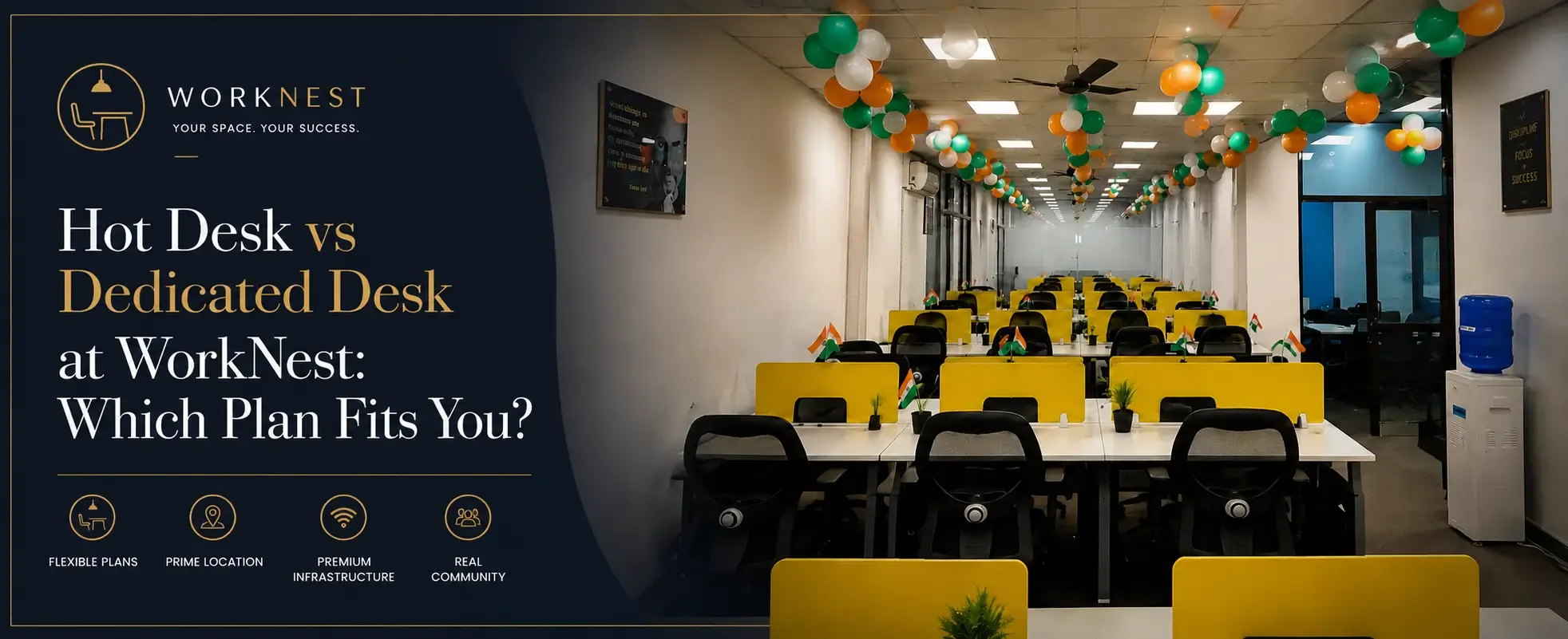
    Hot Desk vs Dedicated Desk at WorkNest: Which Plan Fits You?

    A practical, no-fluff comparison for freelancers and small teams deciding between WorkNest’s two core desk plans before booking a tour.

    By the time you’re comparing a hot desk against a dedicated desk, you’ve already made the bigger decision coworking makes sense for how you work. What’s left is the smaller, more practical question: which plan actually fits your week?

    This is exactly the kind of decision that trips up a lot of freelancers and small teams, not because the options are complicated, but because both come with a real trade-off. A hot desk keeps your costs tied to actual usage but means no guaranteed seat and nothing to leave behind overnight. A dedicated desk gives you consistency and storage but locks you into a fixed monthly cost whether you show up five days a week or two.

    Get it wrong in one direction and you’re paying every month for flexibility you never use. Get it wrong the other way, and you lose the consistency that made a fixed desk worth the money in the first place. Neither mistake is expensive to fix, but both are easy to avoid if you know what to look for.

    This guide breaks down WorkNest’s hot desk and dedicated desk plans side by side, gives you a simple way to decide between them, and walks through a real example of how one member’s needs changed over time.

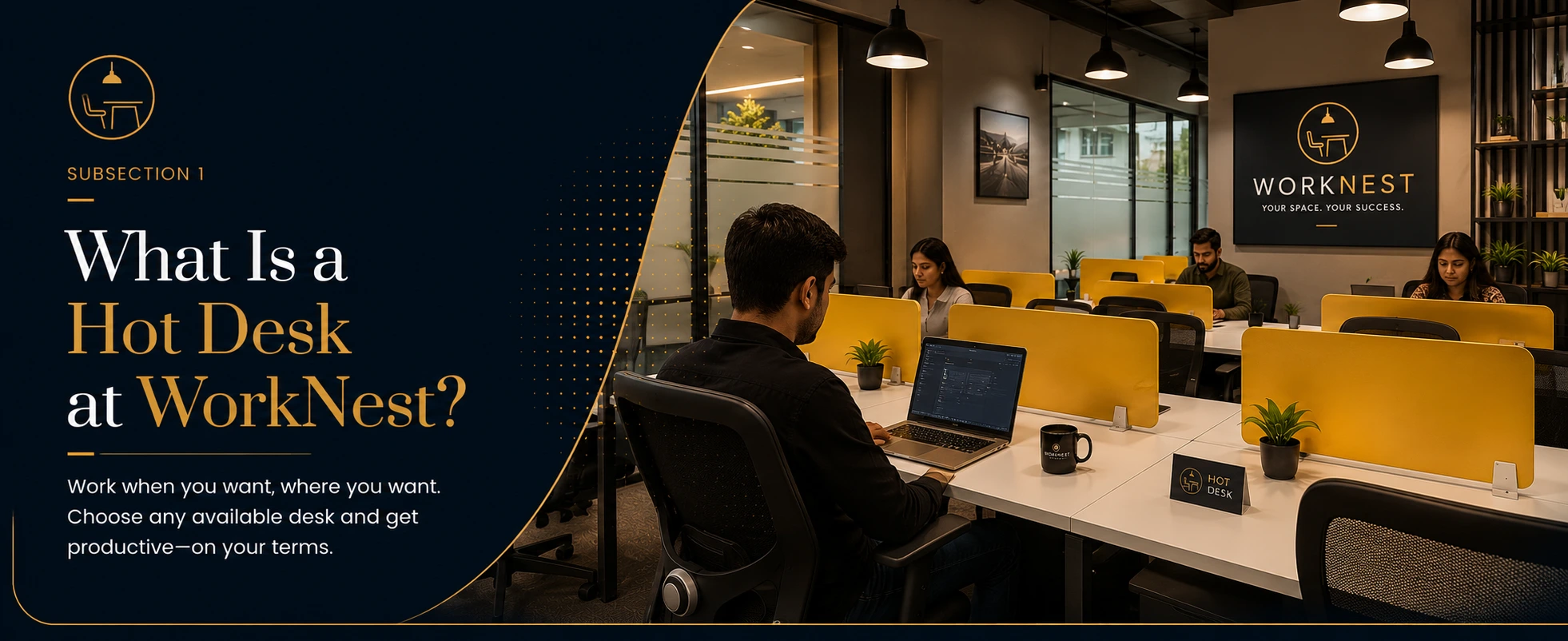
    What Is a Hot Desk at WorkNest?

    What Is a Hot Desk at WorkNest

    A hot desk is an unassigned seat. You don’t get the same desk every day instead, you book a spot and sit wherever’s free when you arrive. Some mornings you’re by the window, other days you’re in a quieter corner near the meeting rooms. Nothing is fixed except your access to the space itself.

    This works well if your week is genuinely unpredictable  some days from home, some days at WorkNest, occasional travel in between. It also works if you’re newer to coworking and want to try it out before committing to something more permanent.

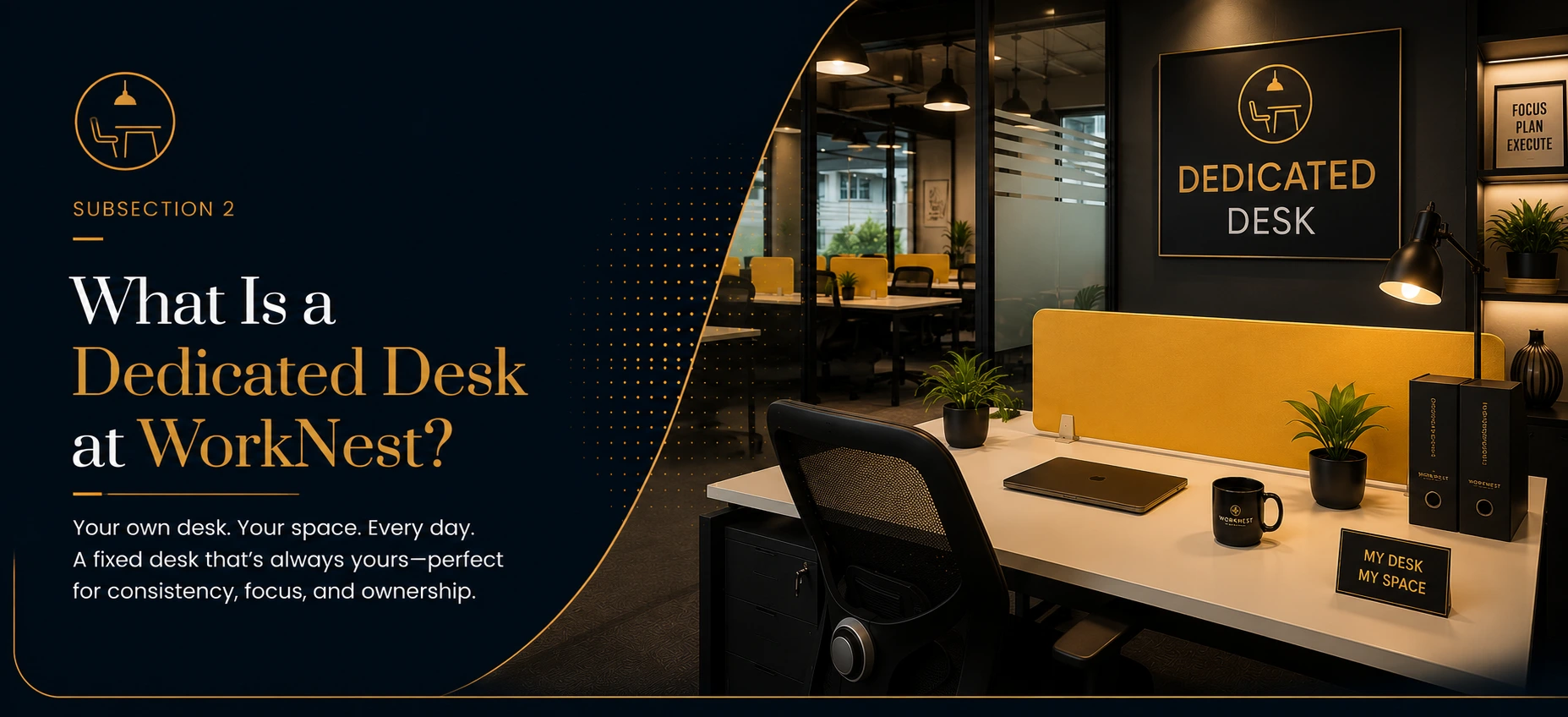
    What Is a Dedicated Desk at WorkNest?

    What Is a Dedicated Desk at WorkNest

    A dedicated desk is the opposite idea. It’s one desk, reserved for you, for the length of your membership. You still get everything the coworking space offers — high-speed internet, meeting rooms, common areas  but that one desk stays yours whether you’re at it or not.

    This is the better fit once your routine has settled into something consistent: showing up most working days, needing a second monitor or files that stay put, or being part of a small team that wants to sit together every day rather than hunting for adjacent seats each morning.

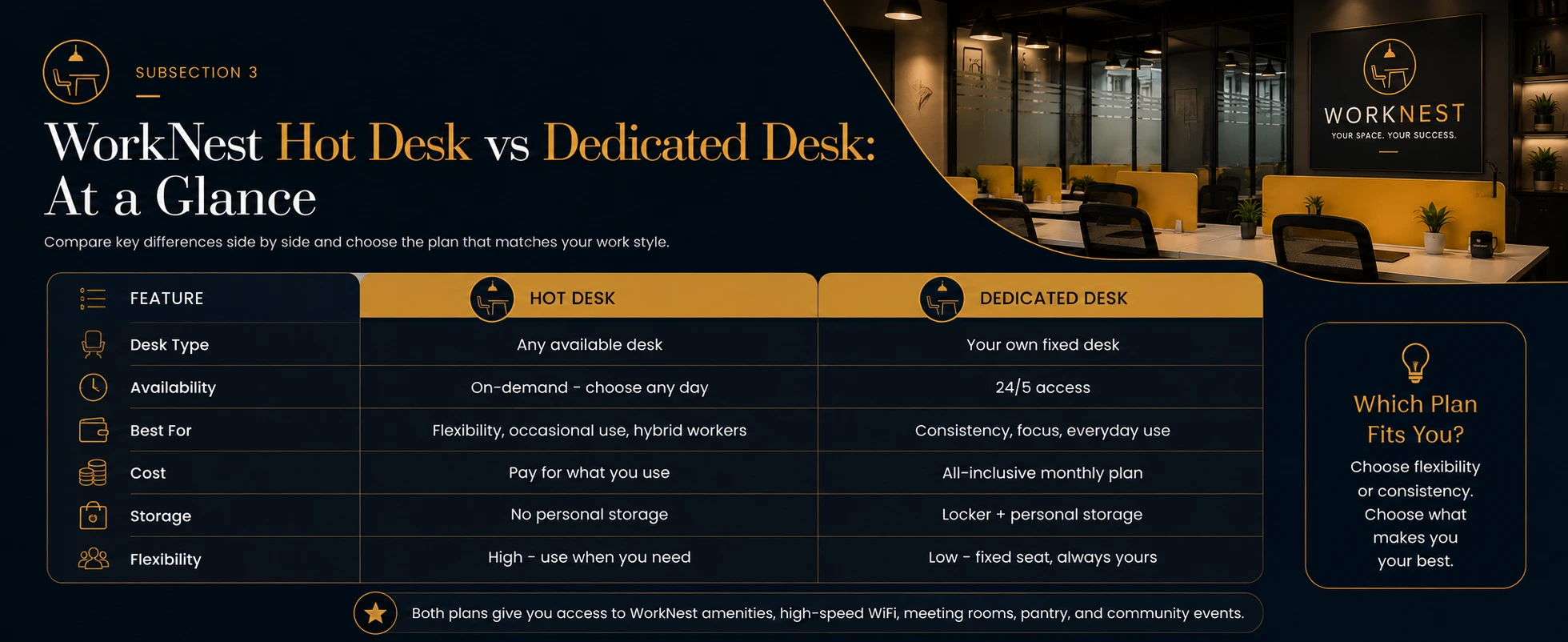
    WorkNest Hot Desk vs Dedicated Desk: At a Glance

    WorkNest Hot Desk vs Dedicated Desk At a Glance

    Factor Hot Desk Dedicated Desk
    Cost Affordable; only pay when you use it More expensive; pay a fixed fee (usually monthly) whether you use the workspace or not
    Flexibility Sit at any available desk, any day you book One fixed seat, reserved every working day
    Privacy Shared with whoever’s in that day Your desk, undisturbed
    Storage None — carry your setup in and out daily Personal drawer/locker included
    Best for Freelancers in 2–3 days/week, frequent travelers, short-term needs Daily regulars, small teams, anyone who needs to leave gear behind

    How to Decide

    Choose a hot desk if…

    • You’re at WorkNest fewer than 3–4 days a week
    • You’re still testing whether coworking fits your routine
    • You don’t need to leave anything at your desk overnight
    • You want the lowest possible monthly spend
    • You like a change of scenery and meeting new people regularly

    Choose a dedicated desk if…

    • You’re in nearly every working day
    • You need a locker, second monitor, or files to stay put
    • You’re part of a 2+ person team that sits together daily
    • Clients or collaborators visit you regularly and you want a consistent spot to host them
    • A predictable routine matters more to your focus than saving on the bill

    If you’re still unsure after reading both lists, count your actual days in the space over the last few weeks  not the days you planned to be there, the days you actually showed up. That number alone settles the decision for most people.

    A Quick Example

    Priya started at WorkNest on a hot desk plan while freelancing part-time alongside a full-time job. Two days a week, a shared desk was more than enough and far cheaper than paying for five. Six months later, once freelancing became her only income and she was showing up daily with a second monitor and a stack of client files, she switched to a dedicated desk. Same coworking space, same community just a plan that matched where her work actually was.

    That’s really the pattern worth watching for: start with what your week looks like today, and switch plans when your routine changes  not before. WorkNest members move between plans fairly often as their work evolves, and there’s no penalty for starting small.

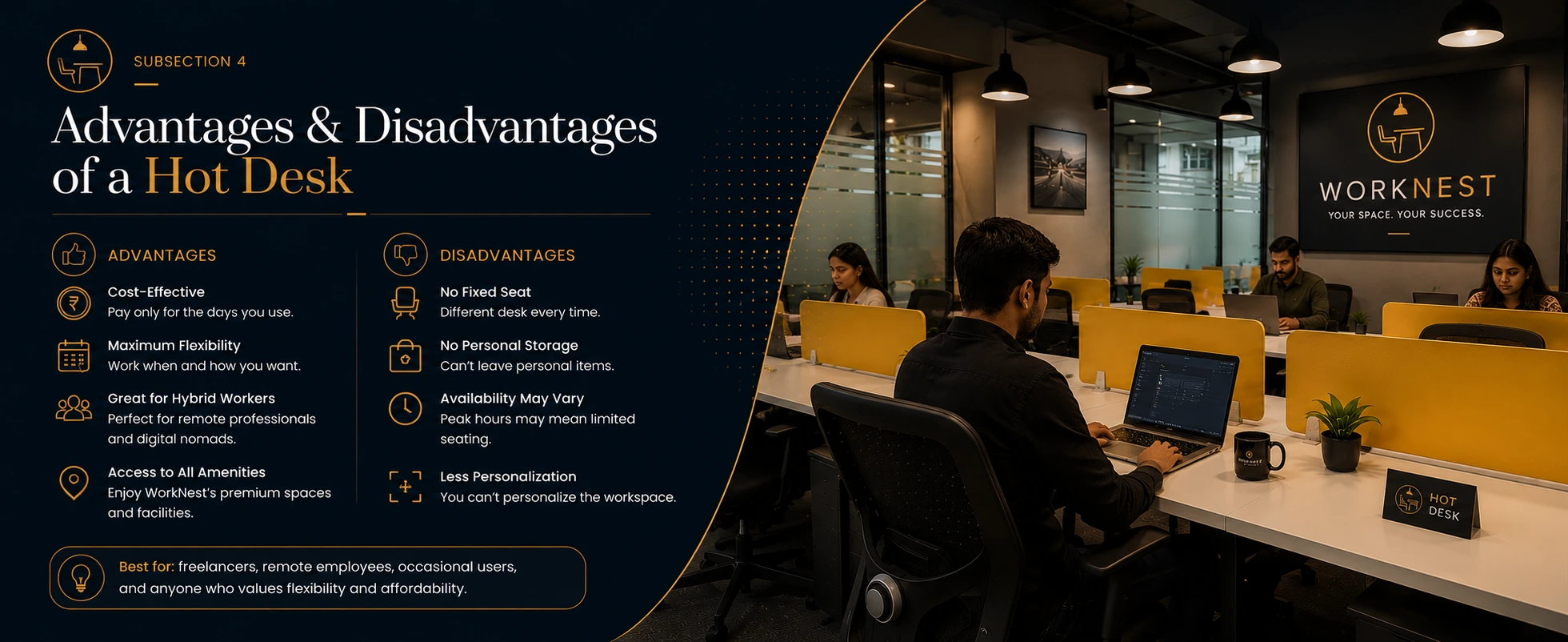
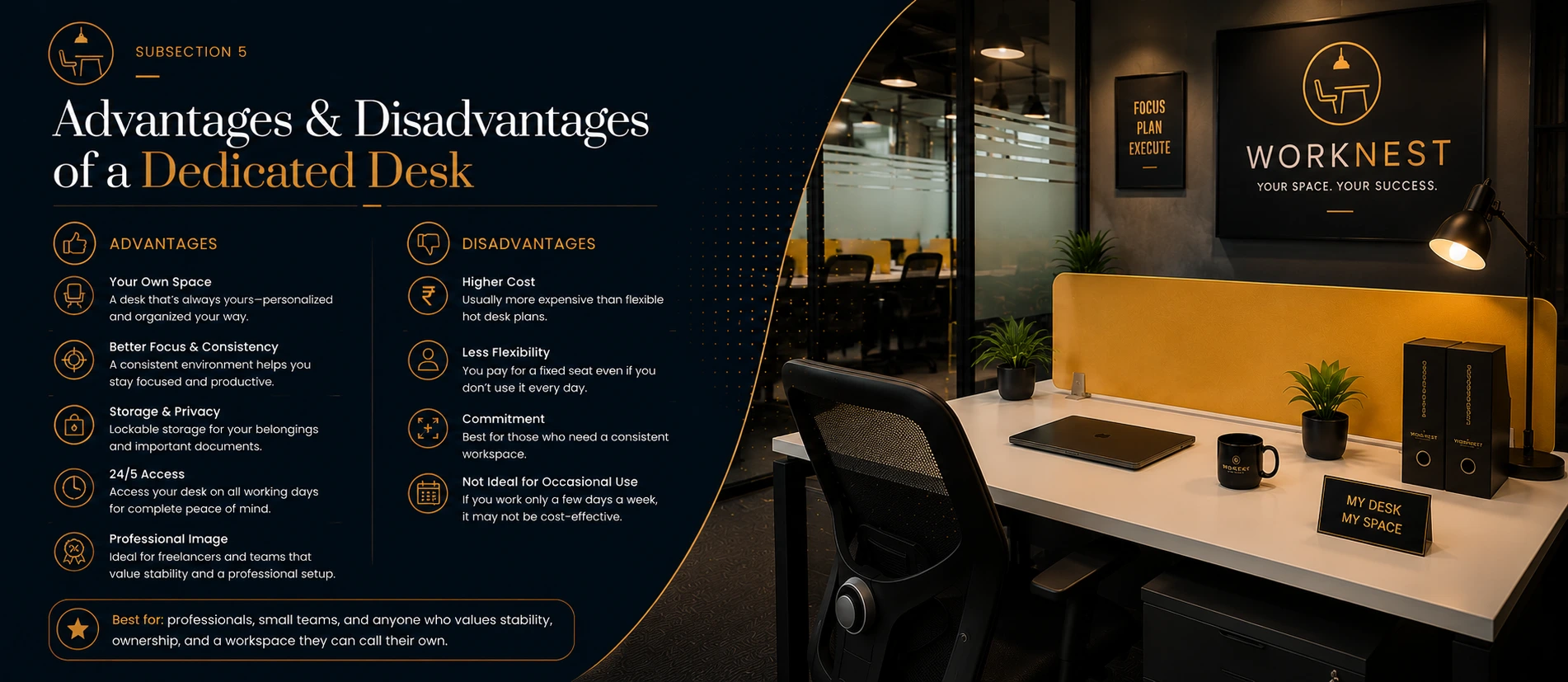
    Advantages and Disadvantages of a Hot Desk

    Advantages and Disadvantages of a Hot Desk

    A hot desk plan trades a guaranteed seat for lower cost and more freedom. Here’s how that trade-off actually plays out day to day.

    Advantages:

    • Pay only for the days you use no fixed monthly cost.
    • No long-term commitment, which makes it easy to test coworking before scaling up
    • A change of scenery most days, which can help avoid the monotony of sitting in the same spot every morning
    • Regular exposure to new people, which naturally leads to more networking and casual collaboration

    Disadvantages:

    • No guaranteed seat  on a busy day, you may have to wait or settle for whatever’s left
    • Nothing stays at the desk overnight, so you’re setting up and packing away your work every single day
    • Harder to build a consistent routine, since your surroundings change daily
    • Less practical for hosting clients or collaborators who expect a fixed spot to meet you

    Advantages and Disadvantages of a Dedicated Desk

    Advantages and Disadvantages of a Dedicated Desk

    A dedicated desk flips that trade-off: you give up some day-to-day flexibility in exchange for consistency, storage, and a guaranteed spot.

    Advantages:

    • A guaranteed seat every working day, with no risk of showing up to a full space
    • Personal storage a drawer or locker for files, equipment, or anything you’d rather not carry home
    • A consistent setup that many people find helps with focus and deep work
    • Easier to build familiarity with the same neighbours, which often turns into a stronger sense of community over time
    • A more professional, stable spot for hosting clients or teammates regularly

    Disadvantages:

    • A fixed monthly cost, regardless of how many days you actually show up
    • Less flexibility to roam between locations or change your environment day to day
    • Typically requires a more defined ongoing commitment compared to a pay-as-you-go hot desk

    Laid side by side, neither list makes one option universally “better” a hot desk’s disadvantages are simply a dedicated desk’s advantages, and vice versa. What matters is which set of trade-offs fits how your week actually looks right now, not which one sounds more impressive on paper.

    Frequently Asked Questions

    Is a hot desk cheaper than a dedicated desk at WorkNest?

    Generally, yes  a hot desk is priced around how often you actually use it, while a dedicated desk carries a fixed monthly rate regardless of attendance. For anyone in the space fewer than 4 days a week, a hot desk plan is usually the lower-cost option.

    Can I switch from a hot desk to a dedicated desk later?

    Yes. It’s common for members to start on a hot desk while their routine is still settling and move to a dedicated desk once they’re showing up consistently or need extra storage.

    Does a dedicated desk come with storage?

    Yes  WorkNest dedicated desk plans include a personal drawer or locker, so you’re not carrying files and equipment back and forth daily.

    What’s best for a small team of two or three people?

    A dedicated desk setup usually works better for small teams who want to sit together every day and need a consistent spot for informal check-ins, rather than coordinating hot desks for the whole group each morning.

    How do I know which plan is right for me?

    Track how many days a week you’re actually at WorkNest over a typical month. If it’s 4 or more, a dedicated desk usually makes more financial and practical sense. If it’s fewer, a hot desk plan keeps your costs matched to your actual usage.

    Can I book a hot desk at more than one WorkNest location?

    Most flexible hot desk plans allow this, letting members use different WorkNest branches depending on where they’re working from that day worth confirming at the specific location you’re touring, since availability can vary by branch.

    Is there a minimum commitment period for a dedicated desk?

    Dedicated desk plans are typically billed monthly, though exact minimum terms can vary by location and season. Ask your WorkNest advisor for the current terms before signing, since these details are updated periodically.

    Can I upgrade mid-month if my routine changes?

    Most WorkNest locations can accommodate a mid-cycle switch from a hot desk to a dedicated desk, prorated to your current billing period. It’s worth asking your location’s team directly, since the exact process can vary slightly branch to branch.